
Hi, it’s Mariah, intern #211, and as I take a seat in my third cafe of the afternoon during a day trip to Kyoto, I can’t help but savor this experience. When thinking about cafe culture in the United States, a specific image comes to mind: coffee shops (each one trying to outdo the other). Most conforming to the same set of minimalist design parameters and constructed of cold concrete with metal finishes. But the kissatens I’ve visited in Japan are much different. Narrow storefronts built of wood and stone with single-origin teas brewed multiple times, house-made blends or specialty drinks, these are the kinds of cafes that excite me.
If you aren’t familiar with the concept, Kissaten describes a type of cafe here in Japan, and while it’s become more synonymous with small coffee shops in the past few decades, I’m referencing the word’s origin as a “tea drinking house.” As Obubu looks to the future and considers developing a kissaten of their own, I wanted to combine my passion for specialty drink development with what I’ve learned and tasted while here at Obubu.
WHAT IS A SPECIALTY DRINK?
For me, it describes a non-alcoholic drink that highlights the complexity of tea and draws new connections between everyday ingredients with tea as the focal point.
When developing a specialty drink, I like to keep three things in mind: the subject, the season and the surprise.
SUBJECT
The subject is the star of the drink. An ingredient, component, or in my case, the type of tea. This is going to be the main factor that determines the flavor profile of the drink. Because it’s at the core of our creation, the other elements we add are going to be balanced around this the ingredient. This is probably the easiest step in the process because it’s all about picking a tea that you really like and want to try it in a different light.
For my drinks, I wanted to highlight four different types of tea, and with the demand for matcha at an all time high, I wanted to try and showcase other teas that I felt deserved some time in the spotlight.
SEASON
Season is very important because not only does it highlight when ingredients will be at their most flavorful, but the season also helps shape the profile of a drink: the visual color palette associated with each season, the temperature (do you need to stay cool or warm up?) and seasonal cravings that only come around once or twice a year.
In Japan, I have access to different ingredients than I am typically accustomed to at home. It was a welcome challenge, and I chose kabocha squash, chestnut, persimmon and rice as my autumn ingredients.
SURPRISE
The most fun thing about developing a specialty drink is the ability to draw new connections between ingredients. It’s always fun to test elements that seemingly have no place in a recipe but who have complimentary or contrasting flavors. This “surprise” often adds something special to the experience and makes the drink more than just a drink but can also be a lesson to consumers, as their taste buds experience a unique combination and a new flavor pairing is discovered.
I’ll save my surprises for my recipes which are listed below!
PUMPKIN SPICE LATTE (AKA KABOCHA TOGARASHI LATTE)
My spin on a typical PSL using hojicha as the base of the drink with a kabocha squash syrup deepened with the Japanese seven-spice blend, togarashi, and kokuto sugar.
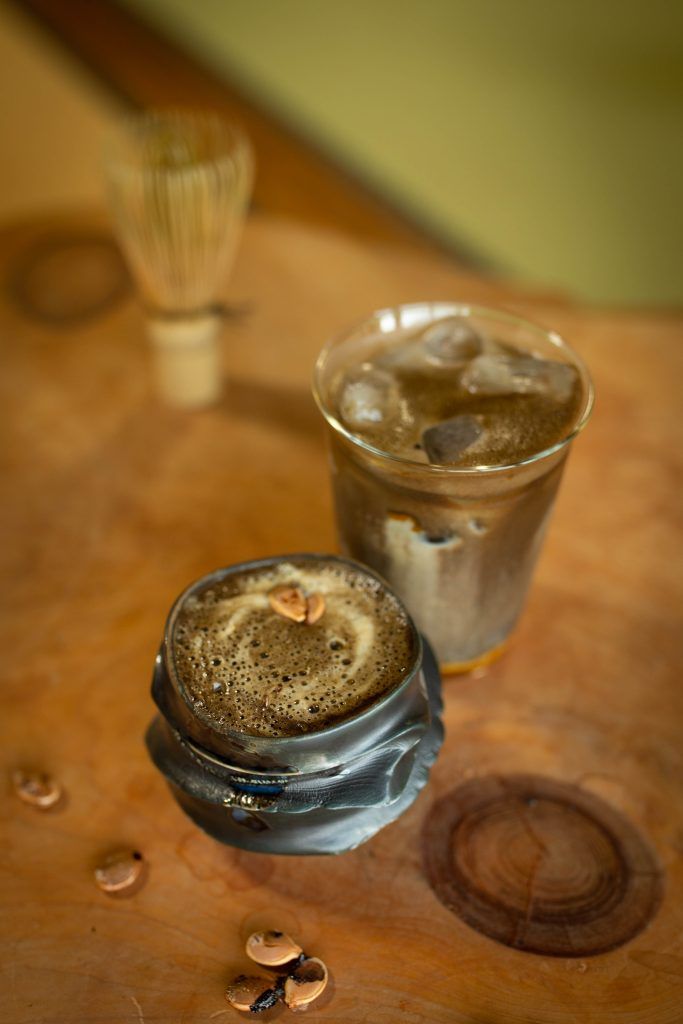
INGREDIENTS
- 5g of hojicha powder
- 40ml of water
- 120ml of milk
- 15g kabocha togarashi syrup (see below)
- Spiced pumpkin seeds (for garnish)
DRINK BUILD
Smear reserved kabocha puree around the walls of the cup. Add 15g of kabocha togarashi syrup.
In a separate bowl, sift in hojicha powder. Add boiling water and then whisk until incorporated.
Pour hojicha into the cup and give the ingredients a stir.
Steam milk and float the froth on top.
Garnish with the spiced pumpkin seeds.
If iced, prepare the initial steps the same, but after pouring syrup, add ice and then layer the milk and hojicha.
KABOCHA TOGARASHI SYRUP
- 300g of kabocha squash
- 200ml of water
- 100g of kokuto sugar
- 6g of togarashi spice blend
Half a kabocha squash. Remove seeds, spread them out on a tray and set aside.
Roast the squash until tender, then remove from the oven, cube and peel off the skin.
Add the roasted squash, water and sugar to a heavy bottomed pot.
Bring to a simmer, stirring the ingredients until the sugar is dissolved. Gently mash the kabocha until no large pieces remain.
Remove from the stove and let the mixture cool before passing it through a sieve. Reserve puree for garnish or for future recipes.
For the garnish, roast the seeds. Once golden brown, remove them from the oven and toss them in kokuto sugar and togarashi.
PERSIMMON KABUSE SENCHA
A refreshing umami-forward sparkling sencha, balanced by the subtle sweetness of persimmon. Reminiscent of a brisk autumn day.
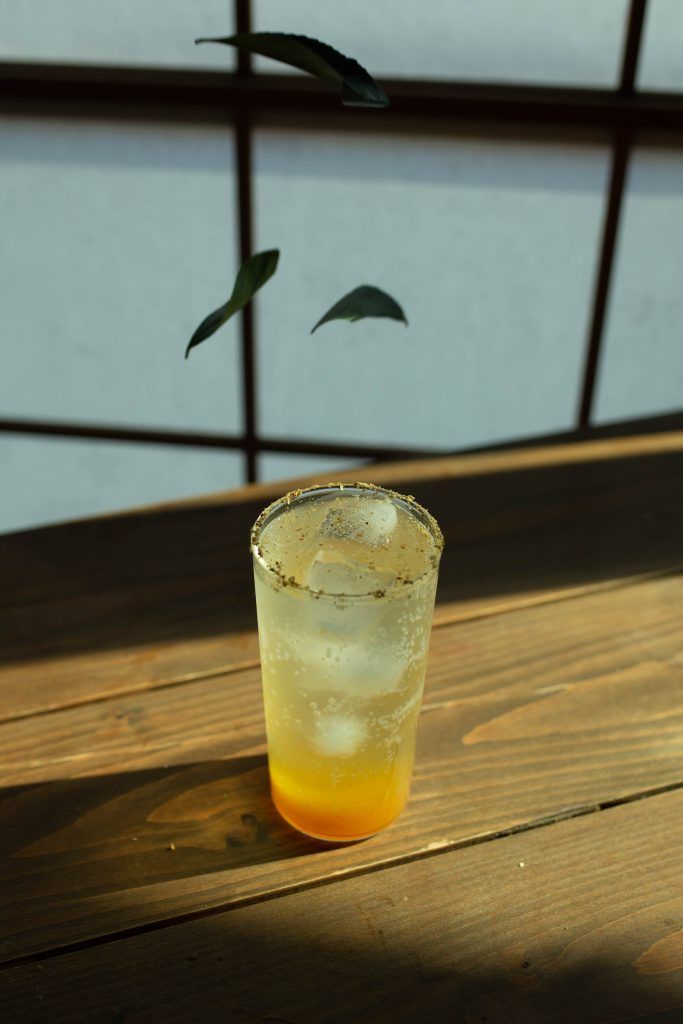
INGREDIENTS
- 350ml kabuse-infused sparkling water (see below)
- 15g persimmon syrup (see below)
- ~2g sansho pepper
DRINK BUILD
Dip the rim in persimmon syrup, then dip in crushed sansho pepper.
Fill the glass with ice and pour the Kabuse infused sparkling water over it..
Layer persimmon syrup on top.
Give the drink a good stir to incorporate all the ingredients.
KABUSE SPARKLING WATER
- 1 bottle of sparkling water
- 12g of kabuse sencha
Add kabuse sencha to sparkling water.
Let the bottle cold brew in the fridge for 3-12 hours.
PERSIMMON SYRUP
- 500g of persimmon
- 200ml of water
- 100g of syrup
Remove seed and skin from the persimmons.
Add the persimmon flesh, water, and sugar into a saucepan. Heat the ingredients until boiling, then reduce heat to a simmer. Once the sugar has dissolved, remove the pan from heat and add a splash of yuzu juice.
Give the mixture a stir and let it cool before bottling.
KYOBANCHA HOT COCOA WITH CHESTNUT CREAM
One of my favorite teas stands at the center of this rich, decadent treat with a nutty finish.
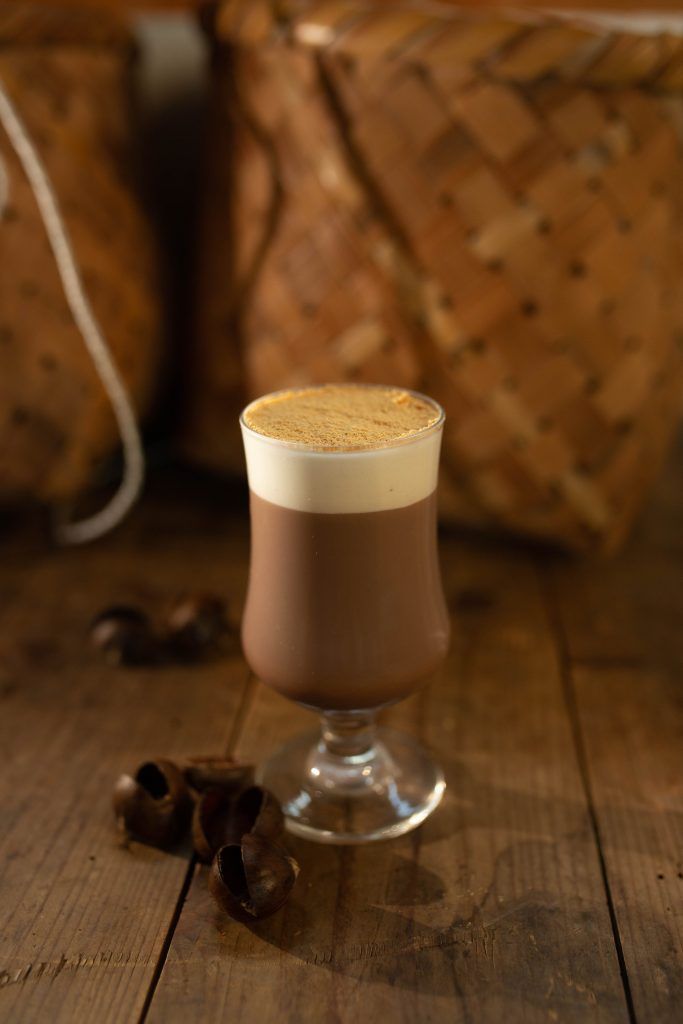
INGREDIENTS
- 120ml milk
- 120ml strong-brewed kyobancha
- 20g kyobancha syrup
- 9g cocoa powder
- 40g of chestnut cream
- kinako powder (for garnish)
DRINK BUILD
Prepare a strong brew of kyobacha using double the leaves than usual. I like to brew 30g of leaf with ~300ml of water. Set half aside to cool.
In a pot, mix cocoa powder and equal parts milk and kyobancha infusion. Add kyobancha syrup. Stir until fully combined.
Pour mixture into a heat safe glass and top with chestnut cream. Dust with kinako.
KYOBANCHA SYRUP
- ~180ml strong brewed kyobancha
- 150g sugar
In a pot, mix the remainder of the strong brewed kyobancha (~180ml) with the sugar. Stir until fully combined. Set aside to cool and thicken.
CHESTNUT ORGEAT
- 100g peeled and roasted chestnuts
- 150g water
- 150g of sugar
- splash of almond extract
Pour chestnuts, water, and sugar into a pot and cook until boiling and sugar is dissolved.
Lower heat and leave the mixture to simmer for 20 minutes.
Add almond extract and transfer the mixture to a blender. Blend until no large pieces remain.
Strain through a sieve and let the orgeat cool.
CHESNUT CREAM
- 240ml heavy cream
- 30ml chestnut orgeat
Add heavy cream and cooled chestnut orgeat to a large mixing bowl.
Whisk with a hand mixer until soft peaks form.
Store in the fridge until needed.
WAKOUCHA AMAZAKE
A fruit-forward black tea with a sweet fermented finish.
INGREDIENTS
200ml strong brewed wakoucha
amazake (enough to fill large ice cube)
DRINK BUILD
Clarify amazake by pouring through a coffee filter. Once strained, prepare a large, “rocks” ice cube by pouring the clarified amazake inside. If using regular ice, fill multiple cubes in the tray as an equivalent.
Strong brew wakocha, let cool until warm. Pour over the ice cube. As the cube melts, it’ll further imbue the drink with flavor.
Hope the guide and these drink recipes serve as a source of inspiration! Thanks for reading!
Mariah, intern 211 / @mariahmakes.tea