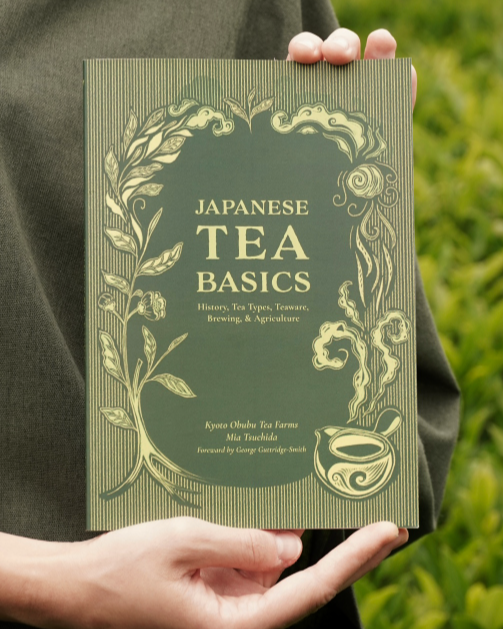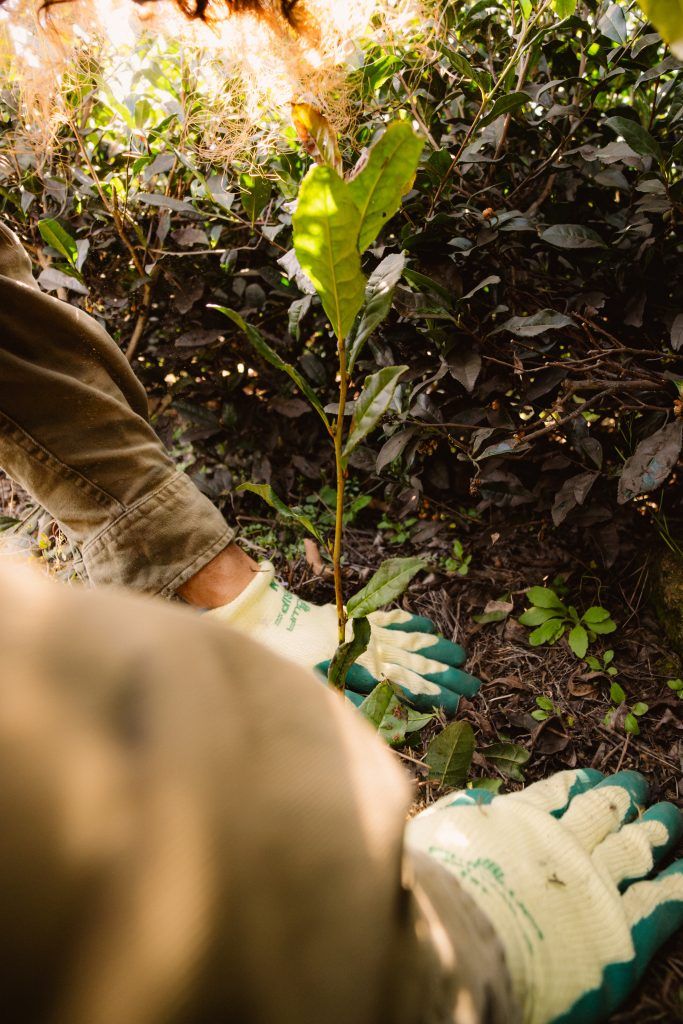

Education has always been one of our core pillars at Obubu. This is why we welcome guests to our tea farm for educational experiences like tea tours and artisan workshops. For our interns and Assistant Managers, this also includes dedicated educational programmes during their time at Obubu.
For anyone who is not able to visit us in person, we have a number of other educational resources available, from books and downloadable resources to our new online courses. Explore all our education options below!
Japanese Tea Basics Online
Our internship programme includes a comprehensive education course that covers the basics of Japanese tea, from cultivation and processing through brewing, teaware, and history. Japanese Tea Basics took root in 2018, and interns have shaped the programme ever since, each contributing their own expertise, research, and time. That collective knowledge has grown into five educational sessions that all interns are taught and then teach to their fellow interns in turn. Now, this course is available online as 5 separate courses, or as 5-course bundle:
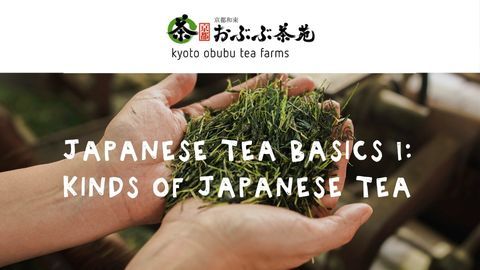
JTB 1: Kinds of Japanese Tea
This course begins with an overview of tea in Japan, discussing the basic categorisation of tea types based on the processing they have undergone. We then turn to tea processing in depth, covering both primary and secondary processing steps commonly practiced in Japan. Module 3 introduces a variety of tea types common in Japan, and in Module 4 we turn to the rarer tea types. For each tea, we cover its processing and history, as well as what makes each tea type distinct.
¥7,000
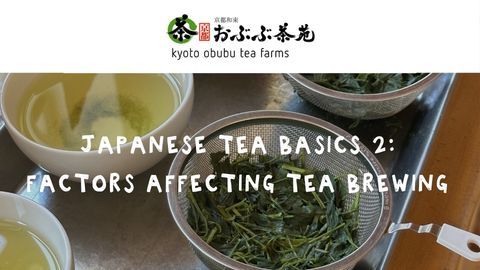
JTB 2: Factors Affecting Tea Brewing
This course starts by exploring the chemical components of tea and how these are impacted by cultivation practices. Then we will look at brewing parameters and how these impact extraction of different components. The course concludes with an exercise in which you will experiment with these parameters yourself.
¥7,000
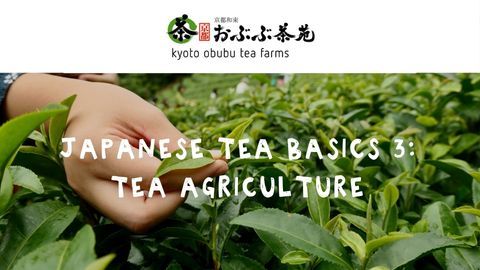
JTB 3: Tea Agriculture
Tea is cultivated in many parts of the world, but Japan’s climate has led to some features of tea agriculture unique to its environment. In this course, we will discuss the tea plant’s biological structures and its environmental needs, the varieties of its distribution around the world, and tea plant management for productive harvesting. This also includes human-driven methods of cultivation, propagation, and field management.
¥7,000
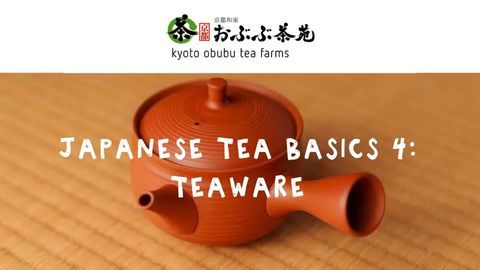
JTB 4: Teaware
Japan is home to a rich tradition of ceramics and pottery, which has grown and developed alongside tea cultivation, processing, and ceremony traditions. This course covers much of that history, beginning with a survey of Japan’s ancient kilns and the functions of pottery more generally. We then consider the stylistic and structural elements present in Japanese teaware, and conclude the course with a survey of common types of teaware produced and used in Japan.
¥7,000
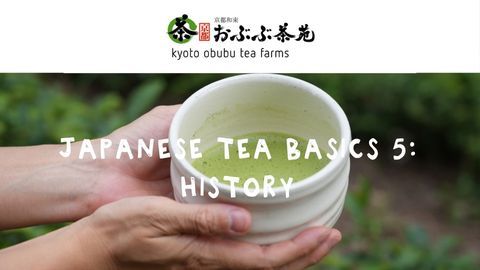
JTB 5: History
Over time, tea in Japan has waxed and waned in popularity. Thus, the history of Japanese tea from its introduction to the country can be described in five “waves.” Each time it crashes back onto the shore, Japanese tea has a new character, shifting from a mysterious foreign elixir for monks to a medicine to a political tool to a form of rebellion to a popular beverage. We begin with a detailed discussion of these waves; then we turn to the character of Japanese tea today and the evolution of harvesting and processing methods. The course concludes with profiles of some of the main tea producing regions in Japan.
¥7,000
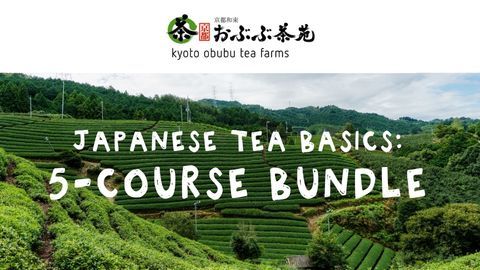
Japanese Tea Basics: 5-course bundle
If you already know you want to complete all five Japanese Tea Basics courses, the bundle is a convenient way to access all courses through one purchase. The bundle includes all five courses, as well as access to webinars for each course.
¥35,000
Course format
Each of the five courses takes 1-2 hours to complete and includes a mix of text and video content, with comprehension quizzes and practical exercises to solidify theoretical learning. Each course ends with a similar multiple-choice test. If you pass, you’ll receive a certificate of completion for that JTB.
The courses are available to purchase individually or as a bundle, and after purchase you will have lifetime access to the full course content. You’ll also receive free updates anytime we revise or expand the content after purchase.
Purchase of a JTB course also includes access to a live webinar hosted by the Obubu Tea Farms education team. These webinars are hosted on a cycle across different time zones; the full webinar schedule is available below.
Course fees
Each individual course is priced at ¥7,000 or as a bundle of all five for ¥35,000. All options include the following:
- Lifetime access to full course materials on Trainer Central
- Lifetime access to all updates to the course materials
- Access to a live webinar for each purchased course via the Trainer Central platform
Webinar schedule
Webinars are bookable after purchase of a Japanese Tea Basics course via the Trainer Central platform. Each Japanese Tea Basics course purchase gives you live access to the webinar for that course.
To book onto a webinar, log in to your Trainer Central account and navigate to the first module of the course’s content. The Upcoming webinars section will include a list of scheduled webinars with registration links, as well as prospective future webinars if the currently scheduled ones don’t match your time zone.
Prospective webinar schedule for 2026:
Autumn cycle (ideal for students in the afternoon/evening in USA)
- JTB 1, Kinds of Japanese Tea: Tuesday 3 November 10am JST
- JTB 2, Factors Affecting Tea Brewing: Tuesday 10 November 10am JST
- JTB 3, Tea Agriculture: Tuesday 17 November 10am JST
- JTB 4, Teaware: Tuesday 24 November 10am JST
- JTB 5, History: Tuesday 1 December 10am JST
Prospective webinar schedule for 2027:
Winter cycle (ideal for students in the morning in Europe)
- JTB 1, Kinds of Japanese Tea: Tuesday 2 March 5pm JST
- JTB 2, Factors Affecting Tea Brewing: Tuesday 9 March 5pm JST
- JTB 3, Tea Agriculture: Tuesday 16 March 5pm JST
- JTB 4, Teaware: Tuesday 23 March 5pm JST
- JTB 5, History: Tuesday 30 March 5pm JST
Please note: These webinar dates are subject to change based on scheduling requirements for Obubu staff, particularly during the busier farming and tourism seasons in spring and autumn. Future webinar dates will be available a few months in advance.