
Introduction
Kouyouka — “the aroma of autumn leaves” — was born from my love for the tea fields of Wazuka.
During my internship at Obubu Tea Farm, I wanted to create a small pressed white tea from the autumn harvest, and to share its story through an experimental guide.
This project became a way to learn from nature, to observe closely, and to honor the quiet rhythm of tea.
Tea begins in the field. Everything else is a continuation.
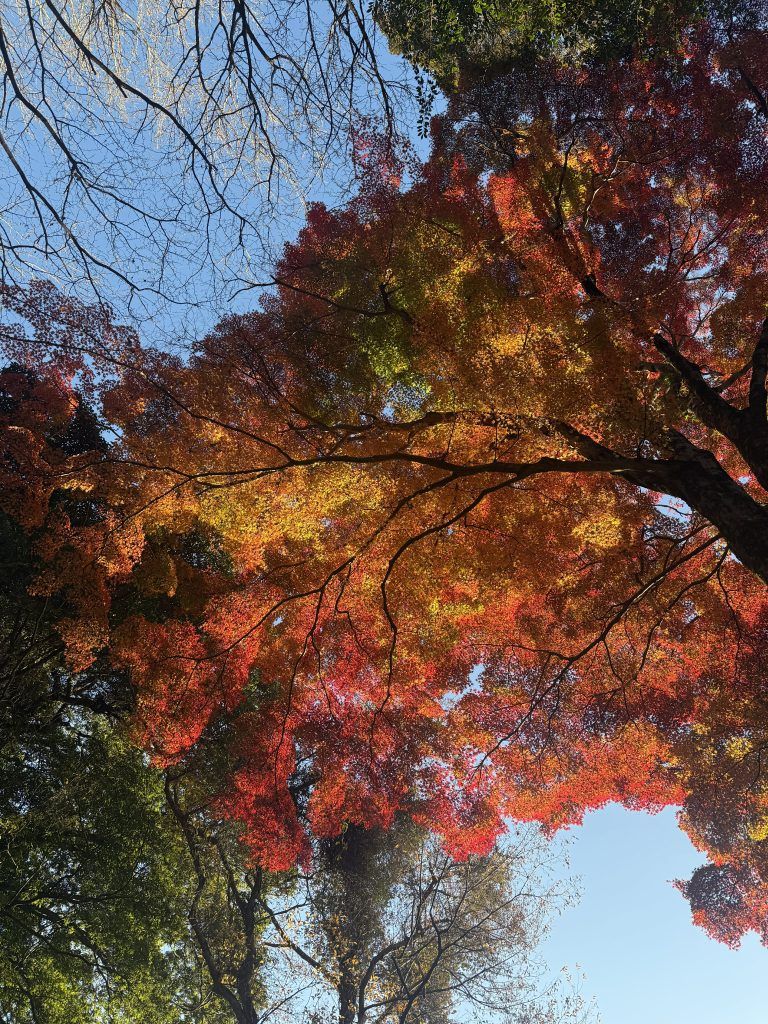
Early Experiments
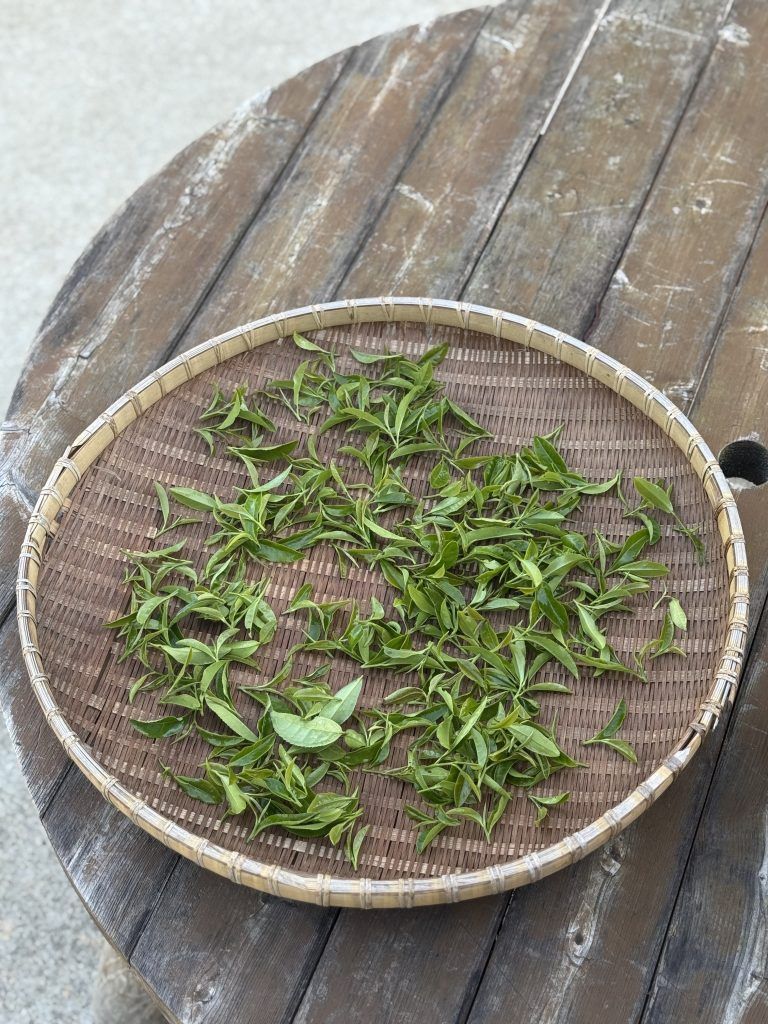
I began with tiny “pocket teas,” made from a handful of leaves gathered with care.
They taught me to observe rather than control. To notice how the leaves soften in the shade, how they rest in the sun, and how white tea asks for presence rather than effort. These early experiments showed me that tea is shaped not only by the hands, but by the season itself.
Processing the Autumn Leaves
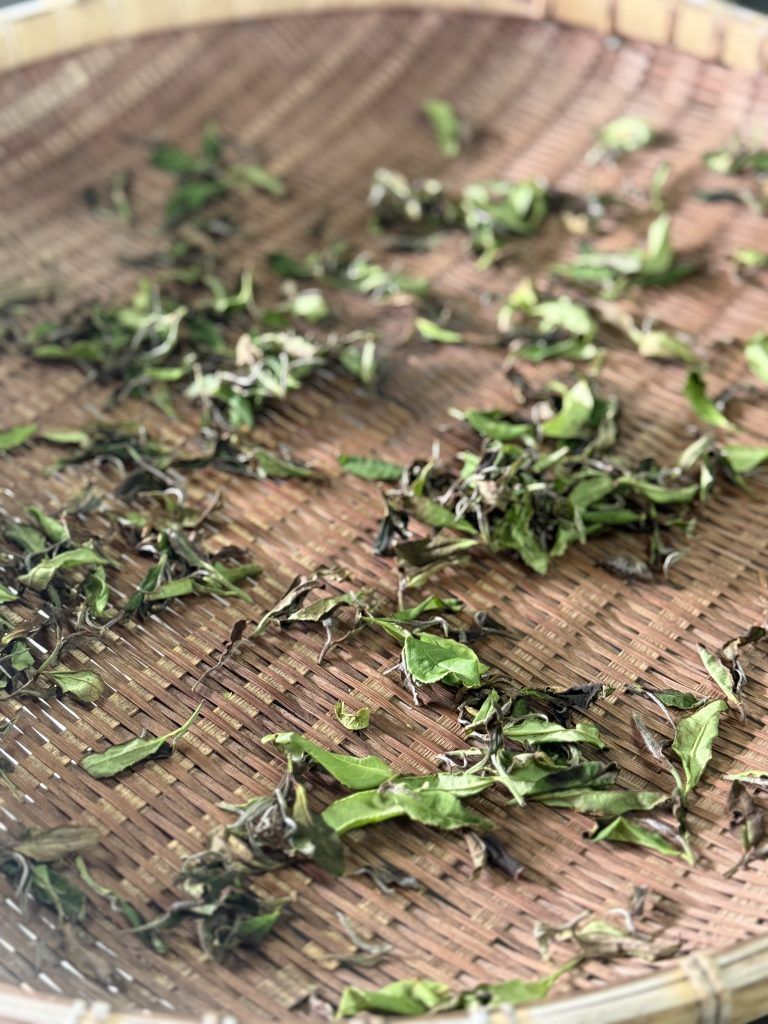
When the moment felt right, I processed a larger batch of autumn leaves over several days.
White tea moves slowly, asking for patience and attention.
My role was simply to accompany the leaves: adjusting conditions, touching them gently, and letting the season guide the transformation.
I also explored the idea of lightly baking the final tea balls — a personal experiment to deepen the sweetness and reveal hidden aromas.
White tea teaches a simple truth: patience is also a form of care.
Pressing the Tea
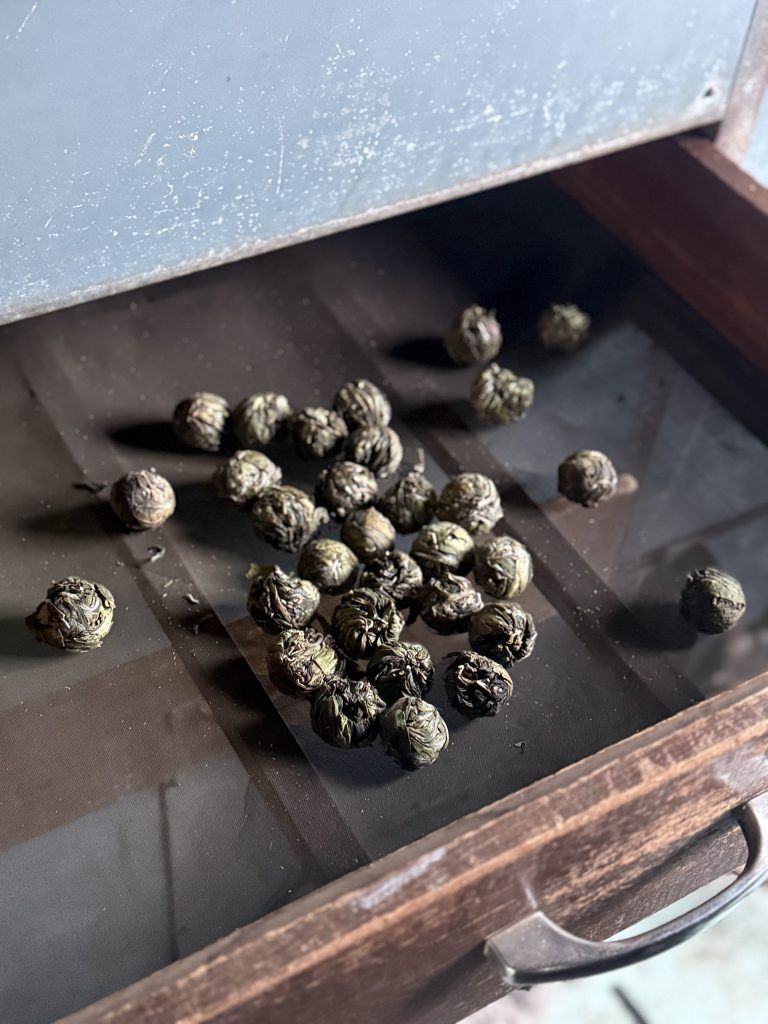
Pressing the tea became a small ritual.
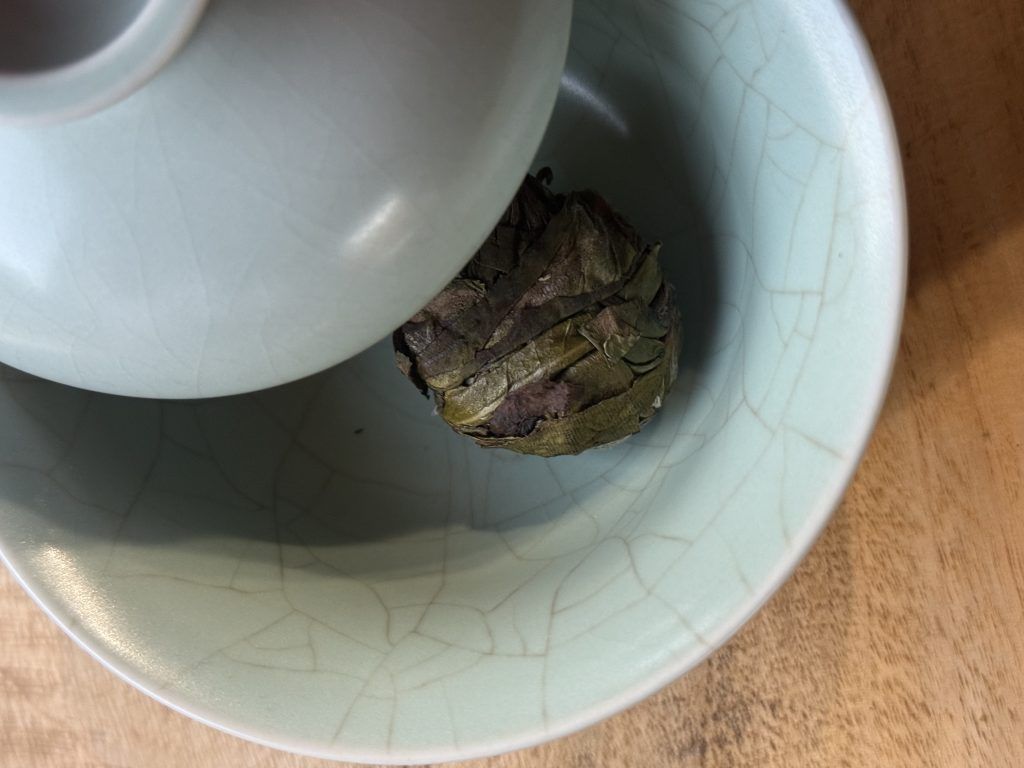
Using simple tools, cloth and wooden pressure, I shaped each ball by hand. The cloth method felt the closest to nature: quiet, imperfect, warm. After two weeks of resting, the tea balls took their final form and received their name, Kouyouka (紅葉香): “the aroma of autumn leaves.”
Tasting notes
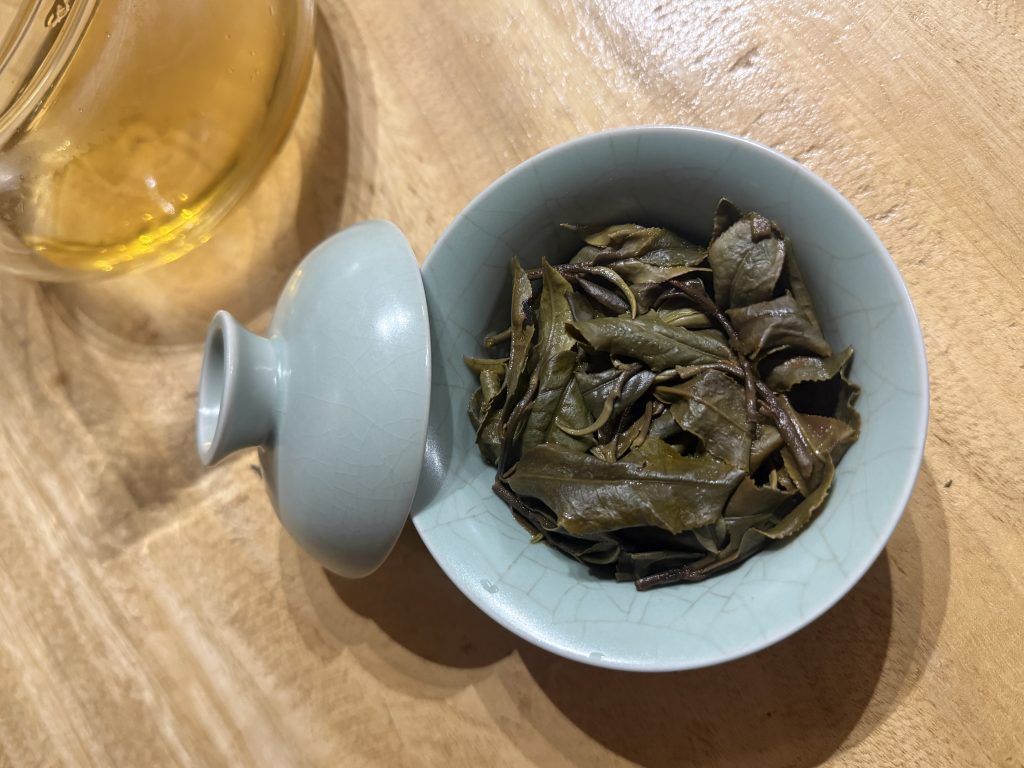
When I finally tasted the tea, it carried softness, gentle citrus, white flowers, fresh grass, and a sweetness that reminded me of the last sunlight over the fields.
This is a tea meant to age, to become deeper with time, just like the quiet memories of autumn. One day, someone will place one of these tea balls in hot water and feel a small echo of Wazuka’s hills.
Time is the final craftsman.
Final reflections
More than a project, Kōyōka is a small way of honoring the land that taught me.
Making tea is an act of harmony — with nature, with time, and with oneself.
My hope is that this guide encourages others to explore, to experiment, and to find their own connection with tea.
I am grateful to Obubu for the chance to learn from the fields, from the leaves, and from the gentle spirit of autumn.
With love, Florencia Van Opstal / Intern #212