Tea tasting is an art form. We use our senses to observe a tea’s characteristics and notes and to differentiate one tea from another. By mastering the skill of tasting tea, you will transform a beverage into a sensory journey.
The cultivar (cultivated variety), the terroir, processing, brewing method and teaware all impact the tea’s unique character, and it turn, a tea’s taste contains clues about its cultivar, terroir, processing, etc. It requires an immense amount of focused tasting sessions – or a huge tea obsession ;) – to identify these factors. I’m always so impressed when someone in the office can guess how the tea was grown, where it came from and how it was processed. It happened many times that Pau or George served me a cup of tea and they asked to guess what the tea is, and I found it so rewarding whenever I guessed one or more elements right. Since coming to Obubu, my love and curiosity for tea have only grown and I began my sensory journey of observing tea.
It’s always nice to have guests from all over the world, coming together to drink and learn about tea. But one frustrating thing about tea tour is that people often find it hard to share what they taste. They might not know exactly what the liquid tastes like or struggle to find the words to describe the flavor, aroma and feeling of the liquid in the mouth. Therefore, I wanted to create a simple guide that guests can use during tea tours and gives them a little hand to let them experience the joy of tasting tea.
To be completely honest, creating this guide was a huge struggle. With no prior graphic design experience, I started a project that was far out of my comfort zone. Next to learning about Japanese tea and its production, one of my goals here at Obubu was to explore different fields of skillsets like photography, public speaking and finally: graphic design.
Putting my perfectionism aside, creating this guide has taught me a lot. I learned to continue working on something that was hard, and to be very honest, very frustrating to make. I also learned more about tea tasting myself. Researching and analyzing about how to properly taste tea on a deeper level was incredibly interesting and rewarding. Thanks to various resources, I learned how to properly taste tea. In this blog, I will talk about what i learned and how you can too learn the art of tasting tea.
Let’s break it down according to our senses:
AROMA & TASTE – what do you smell and taste?
Aroma and taste go hand in hand. They are hard to tell apart though they can be different. They will give us the most information about the tea and its story.
“In general, though, a tea’s aroma is the more fleeting sensation in taste, and the “taste” is the more substantial part.” – Tea Drunk
A long-lasting aroma and taste is indicating a higher quality tea.
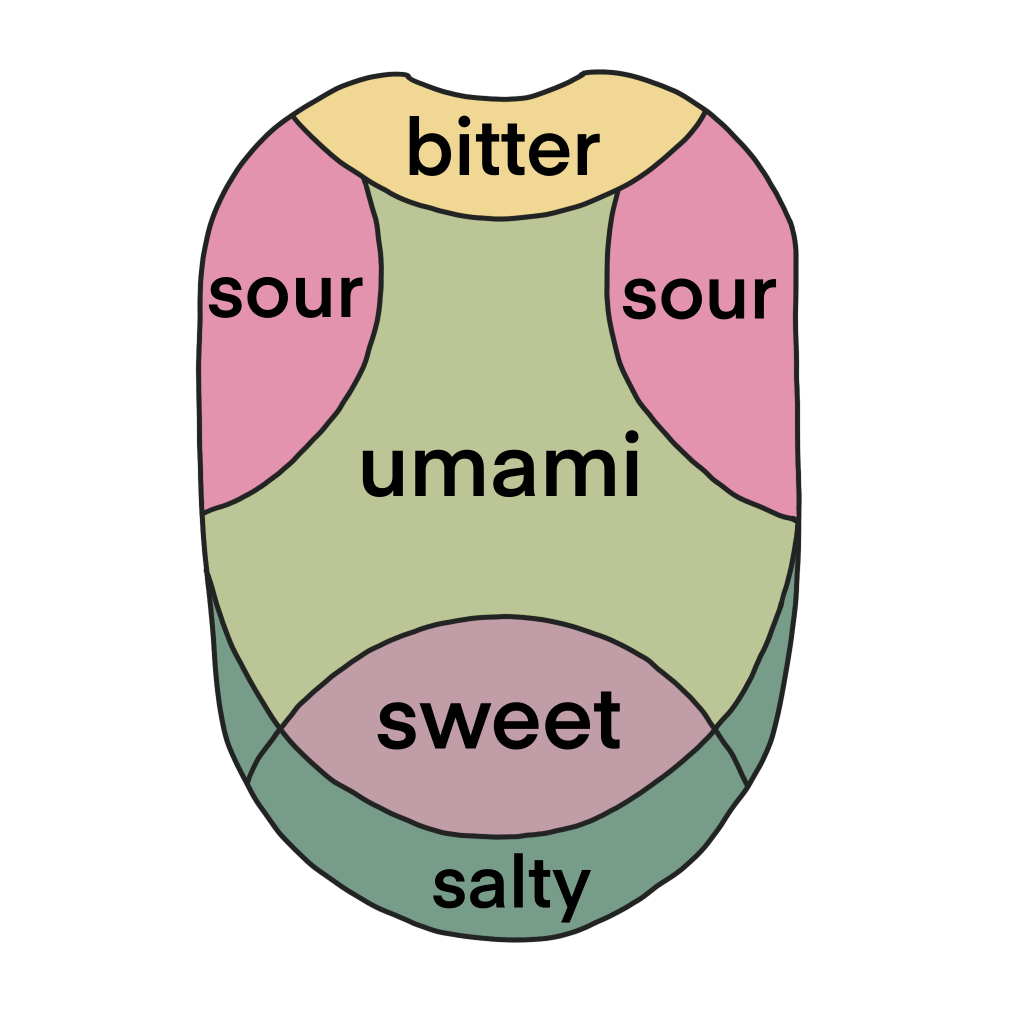
We have 5 basic tastes: sweet, salty, bitter, sour and umami
All teas can have a combination of these five tastes and every tea will have a different balance.
FLAVOR – what flavor notes do you observe?
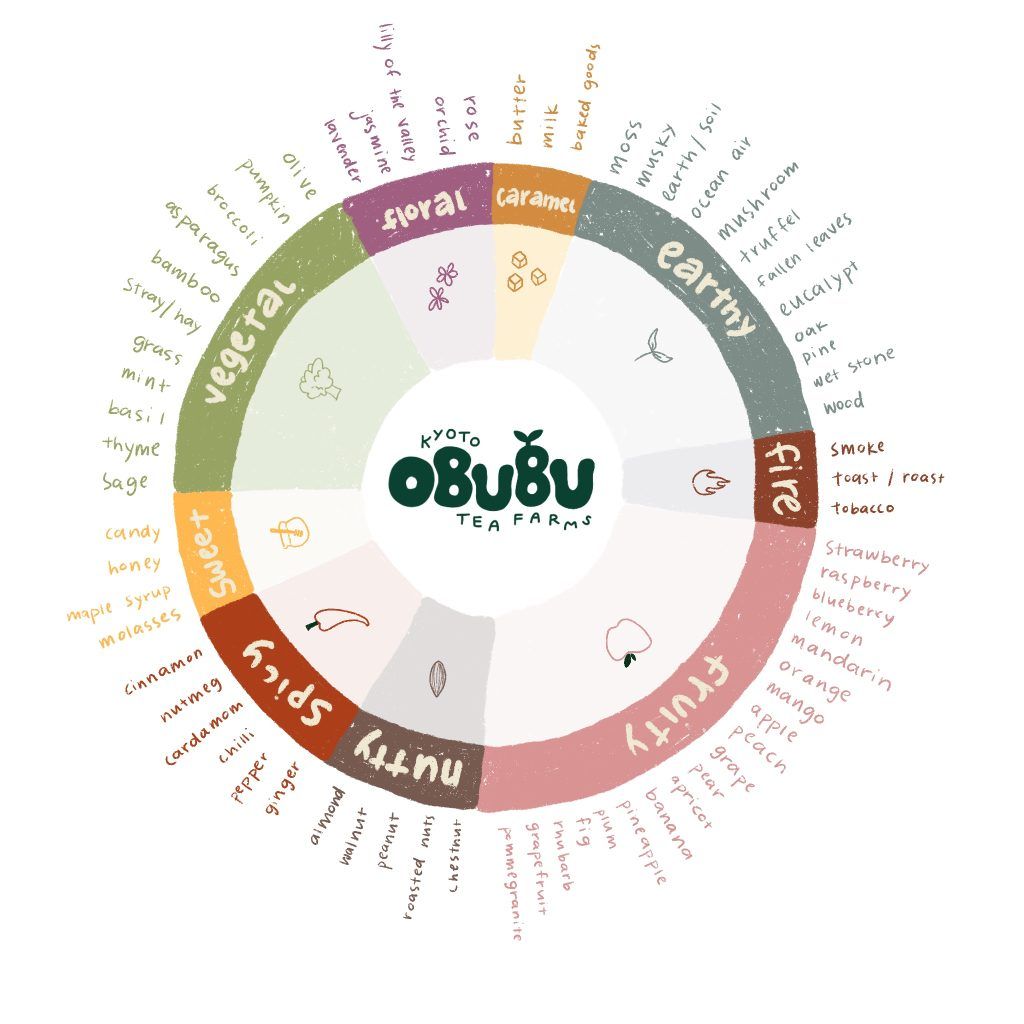
A tea can have many flavors and they can evolve from the headnotes (volatile notes that give us a first impression of the tea) to the body notes (when the liquid is in the mouth) to the tail notes (notes that remain after swallowing).
I created a simple flavor wheel for the back side of my guide that guests could use while observing their tea.
MOUTHFEEL – how does the liquid feel in the mouth?
Mouthfeel is a very interesting part of the tasting process that is related to our sense of touch.
The mouthfeel is an essential part of the tasting and understanding of every tea. Or even coffee, food, wine… Of course, it’s impossible to escape mouthfeel when tasting something. However, some of us aren’t used to paying attention to this part.
Let’s break it down in two parts:
Texture and sensation
- Smooth: pleasant, frictionless texture.
- Astringent: drying sensation
- Creamy/Milky: smooth, rich sensation that coats the tongue, similar to milk.
- Silky/Velvety: smooth, soft, and luxurious feeling.
- Buttery/Oily: rich texture with notes that can remind you of butter or oil.
Body and weight
- Delicate/Light: light and subtle, like a thin, airy liquid
- Heavy/Full-bodied: thick or substantial, filling the mouth
TAIL NOTES / AFTER TASTE
Also, aftertaste can be an overlooked quality when drinking a cup of tea. As I mentioned before, after taste is the hardest quality to achieve when processing a tea and therefore only the highest quality teas will have a pleasant, long-lasting and transforming aftertaste. It’s like the music that lingers after a song has ended. You can also pick up your empty cup after drinking and smell it. What aroma lingers? What do you taste after swallowing? You can break it even further down to the physical feeling that the tea leaves behind in the body. This is more common practice in Chinese tea culture where they pay attention to the Qi or energy that the tea leaves.
Some words to describe the aftertaste:
- clean
- short
- smooth
- lingering
- transforming
- complex
- pleasant / unpleasant
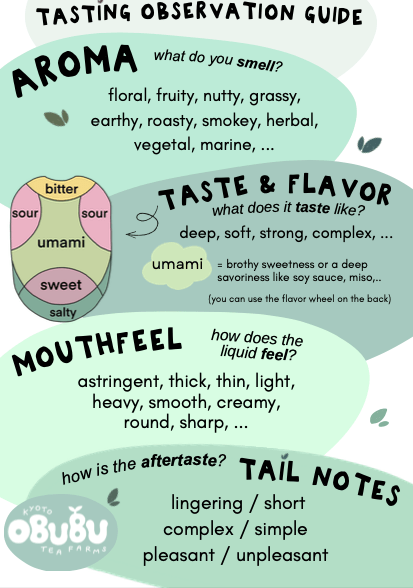
Here is the guide I made for tasting tea during tea tour:
Thank you for reading this blog post! I hope you learned something new today. Remember that all observations are personal. ENJOY
big shoutout to teadrunk.com for teaching me how to taste tea. I used a lot of quotes from their blog.
please check it out: https://www.teadrunk.com/blogs/educational-articles/tea-sensory-analysis-from-aroma-to-aftertaste?srsltid=AfmBOordX9vxzA12CmYfvjW4PzgDOc0KE7DONzPPmUxegNISBfJjsqpO
by Lotte (#215)