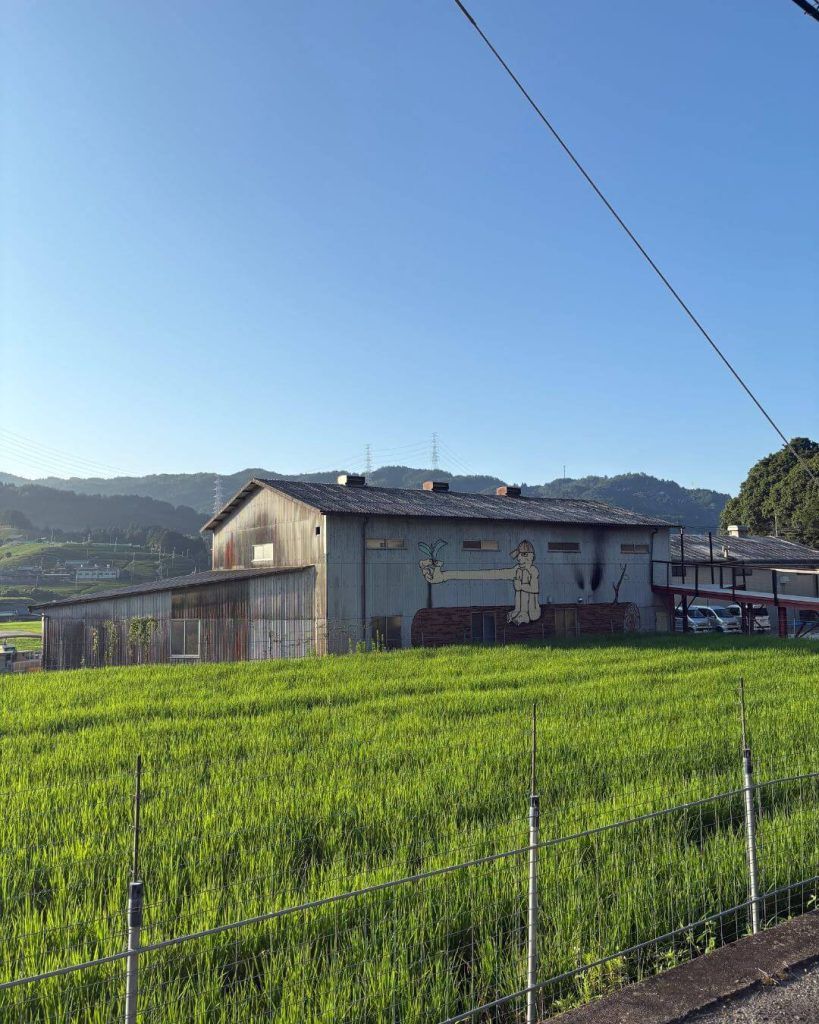
“Taking Japanese tea to the world.”
That vision was what first drew me to Obubu Tea Farms.
As a Development Studies student, I have long been interested in the global Matcha boom—not simply as a trend, but as a social and cultural phenomenon. Through working at a Matcha café and studying abroad, I found myself asking questions such as: Why has Matcha become so popular around the world? and How do tea producers experience these changes?
While I had spent a lot of time thinking about Matcha from the perspective of consumers, marketing, and globalization, I realized there was one perspective I was missing, which was the producers. That curiosity was what led me to volunteer at Obubu.
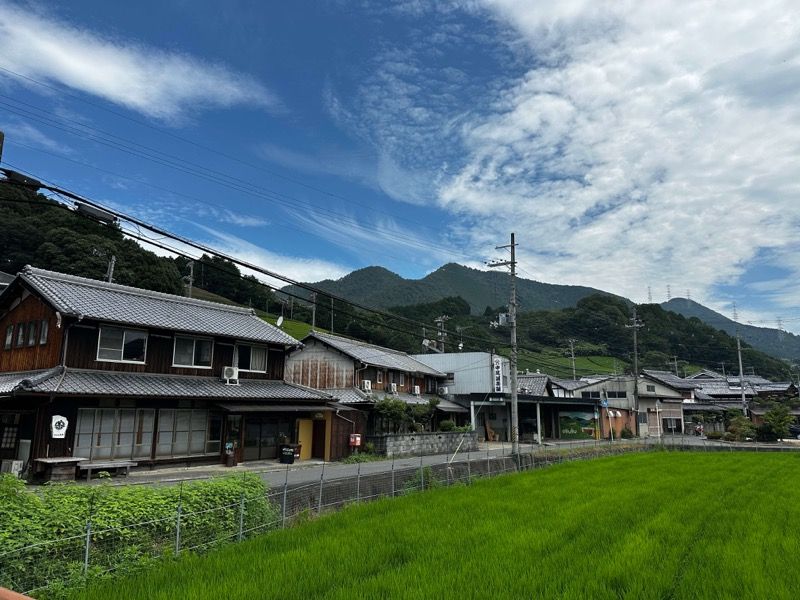
Looking back, the most memorable part of my experience was not the tea itself, it was the people.
Although I was only there for five days, I had the opportunity to meet staff members and interns from many different countries. Everyone had their own story, their own reason for coming to Obubu, and their own relationship with tea. What they all shared was an incredible passion for learning and an eagerness to share what they knew.
Whenever I asked a question, I didn’t just receive an answer. People shared their experiences, their perspectives, and the reasons behind what they believed. I could also feel how proud they were to be part of the Obubu community. It made me realize that this environment is something that has been carefully built over many years by everyone who has been part of Obubu.
At the same time, I also realized how little I actually knew about Japanese tea.
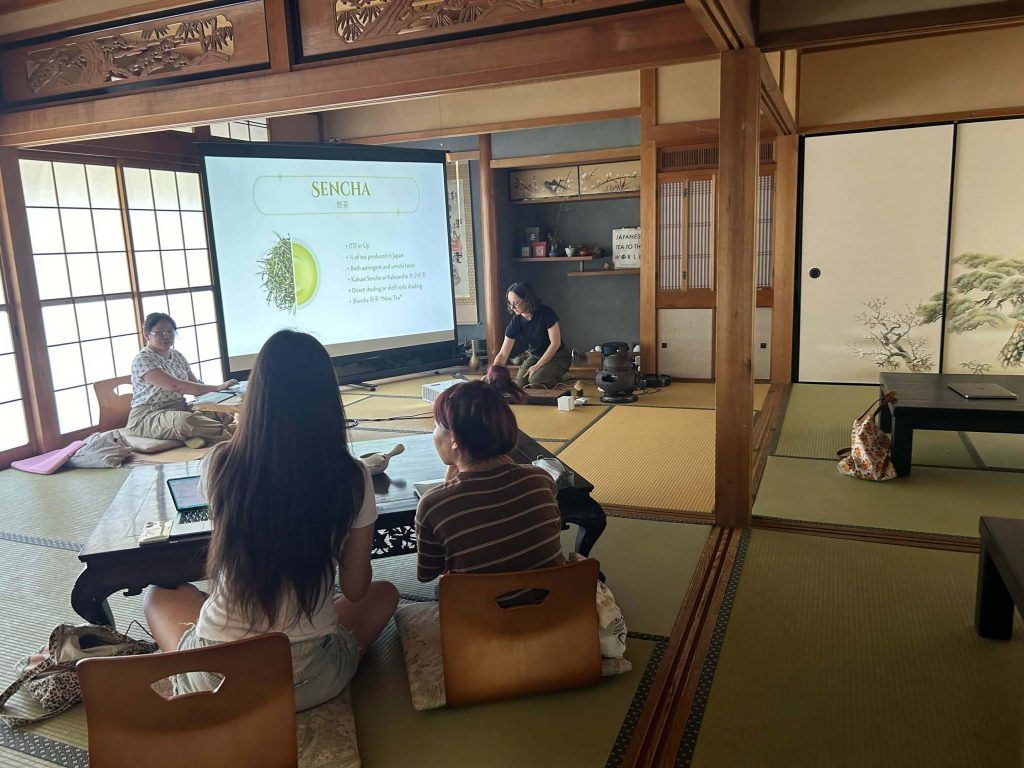
During my stay, I joined tea lectures, visited the tea fields and factory, and learned about tea cultivation, processing, and brewing. I was fascinated to discover that Sencha, Matcha, and Japanese black tea all come from the same plant (Camellia sinensis), yet become completely different teas through different production methods.
I also learned that brewing tea is not simply about making a drink. Small changes in temperature, timing, and technique can completely transform the flavor, and every person experiences the same tea differently. It made me realize that Japanese tea is not only an agricultural product, but it is also a culture built around experience, conversation, and sharing.
I originally came to Obubu hoping to better understand the globalization of Matcha. Instead, I first discovered the richness of Japanese tea itself. I realized that before asking how Matcha is changing around the world, I needed to better understand the culture from which it came.Another aspect of Obubu that inspired me was its unique approach to connecting people.
I learned that Obubu’s international internship program began because a single visitor asked whether they could intern at the farm. That story immediately resonated with something I had been thinking about for a long time.
Sometimes we need an outside perspective to recognize the value of something we have always taken for granted.
In many ways, my own interest in Matcha deepened after seeing how much people outside Japan appreciated it. Likewise, Obubu’s story reminded me that new perspectives often emerge through exchange. Rather than simply sharing Japanese tea with the world, Obubu has created a community where people from different backgrounds continuously rediscover and reimagine its value together.
That was one of the most meaningful lessons I took home.
Perhaps the biggest surprise, however, was how my own interests changed during these five days.
Before coming to Obubu, my curiosity was almost entirely centered on Matcha. By the time I left, I had fallen in love with Japanese tea as a whole.
I discovered Kyobancha, Mejiro Kukicha, and Japanese black tea, each with its own unique character. I learned the joy of choosing a tea, carefully brewing it, enjoying the second infusion, and sharing those moments with others. Drinking cold Kyobancha in the tea fields on a hot summer day and smelling the sweet aroma of Japanese black tea during processing are memories I know I will never forget.
When I first came to Obubu, I was searching for answers to my own questions.
I certainly found new perspectives, but I also found something I hadn’t expected, a genuine appreciation for Japanese tea itself.
This experience reminded me that the value of culture is not something we simply inherit. It is something we continuously rediscover through new experiences, different perspectives, and meaningful encounters with others.
I hope to continue exploring the relationship between Japanese tea and the world, carrying with me the questions, conversations, and inspiration that I found at Obubu.