
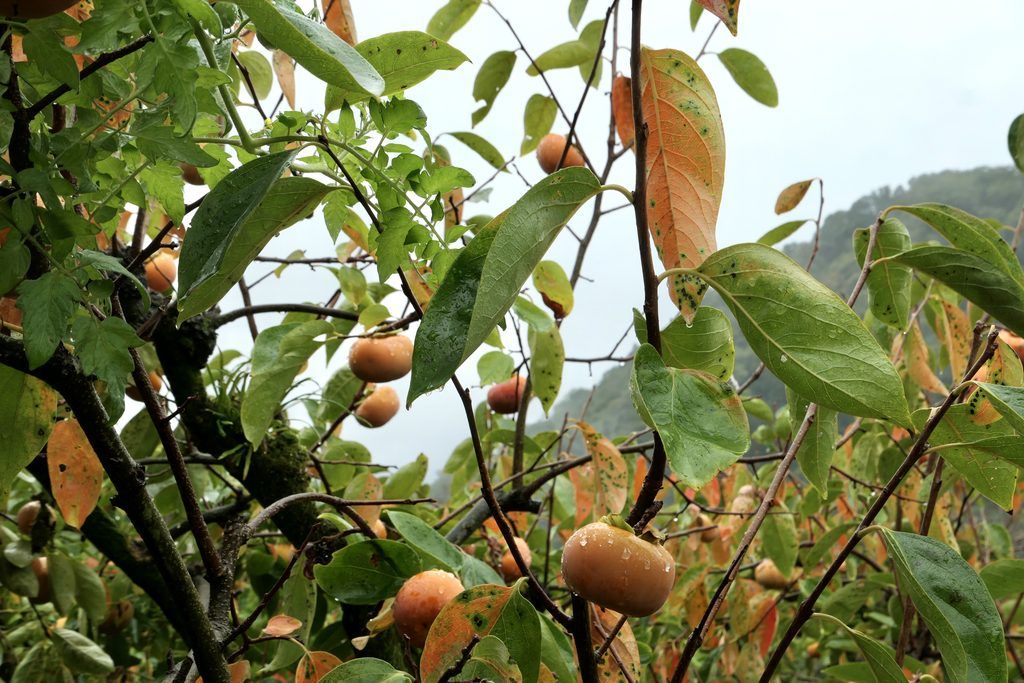
Hello again, dear reader! It’s me, Amber, AM #15, back for another adventure!
If you haven’t read my previous blog (written with Fiona) about our trip to Awaji Island, make sure to check it out here: Awaji Blog
This time, I’m joined by Ching, our lovely former intern, and Katy, our new AM!
I’m starting to think I should create a whole series about Japanese specialities, combining food and tea. Hahaha! But welcome to another little adventure!
This time, we headed to Wakayama Prefecture and south of Nara, about two hours from Obubu, to explore the wonderful world of Kaki (柿), Japanese persimmons! More precisely, we visited Katsuragi, a region famous for growing these beautiful orange fruits.
Have you ever tried persimmon? Also called the food of gods, this beautiful sun fruit that grows in autumn/winter.
Let me tell you more.
Our two-day adventure started at the Kaki Persimmon Museum, where we discovered just how fascinating this fruit can be. The museum’s architecture already gives you a clue about what awaits inside!
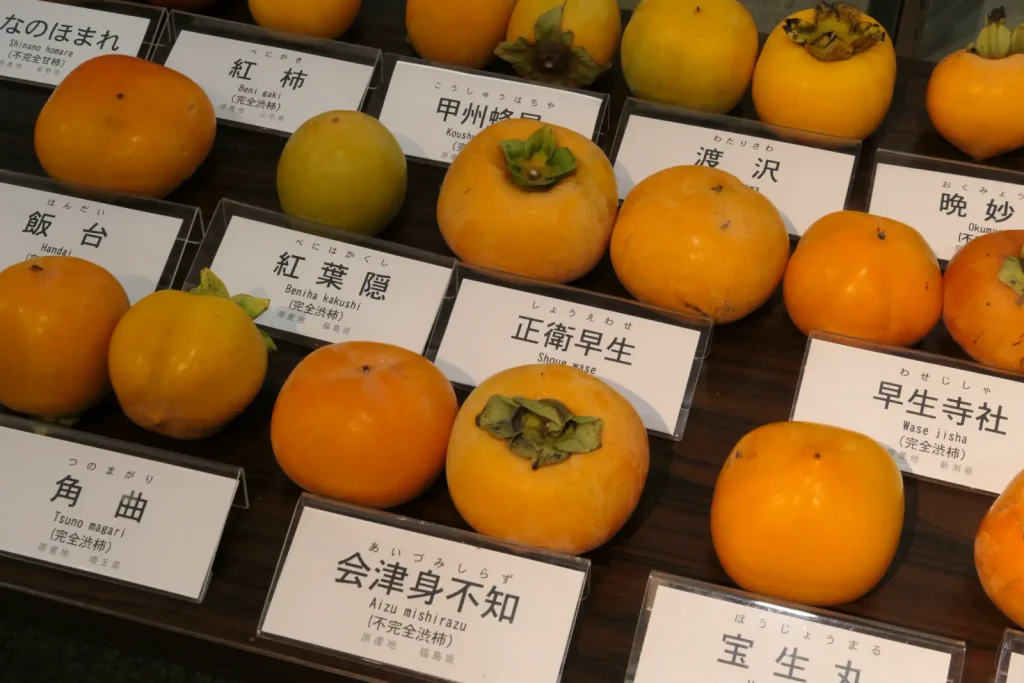
Inside, we learned about the different varieties of persimmons grown in Japan. Apparently, there are around 142 cultivars! That’s a LOT of kakis to choose from!
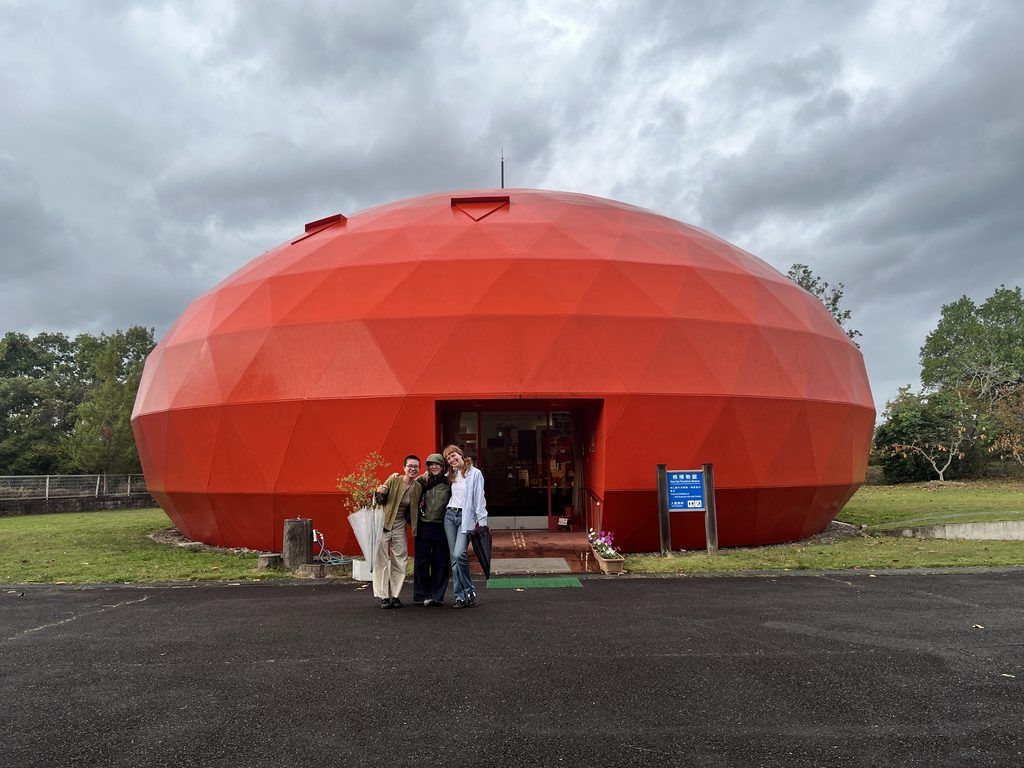
And here’s another fun fact: October 26th is Persimmon Day in Japan. We couldn’t have picked a better weekend, as we visited on October 25th and 26th. Talk about perfect timing!
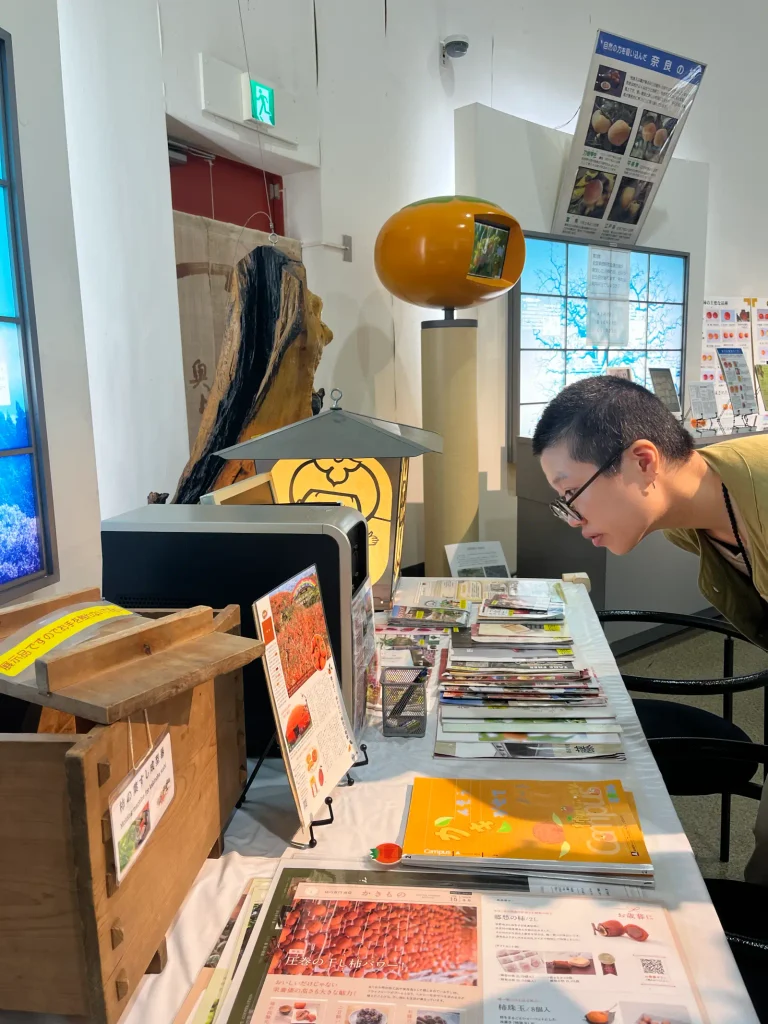
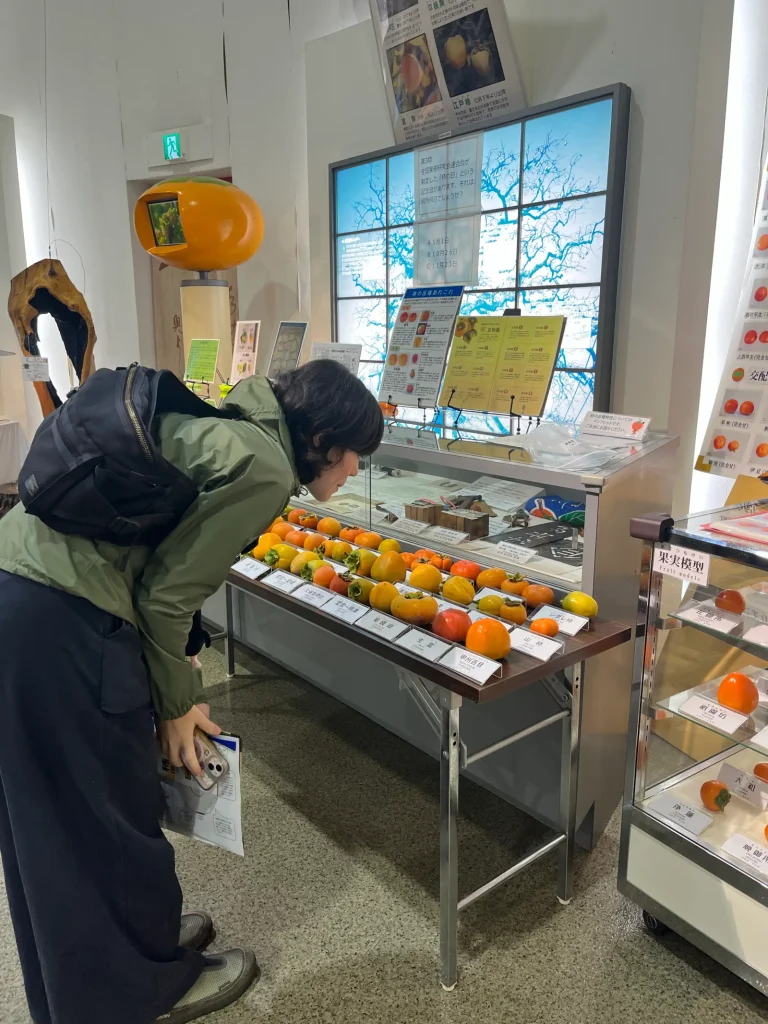
This was a very fun experience in learning about this fruit that a lot of members of Obubu is fan of.
We also discovered that persimmon trees produce beautiful little flowers, usually blooming between May and July.
Of course, we couldn’t leave the museum empty-handed. We even won our first kaki by taking part in a little quiz. A very fun activity to start the day.
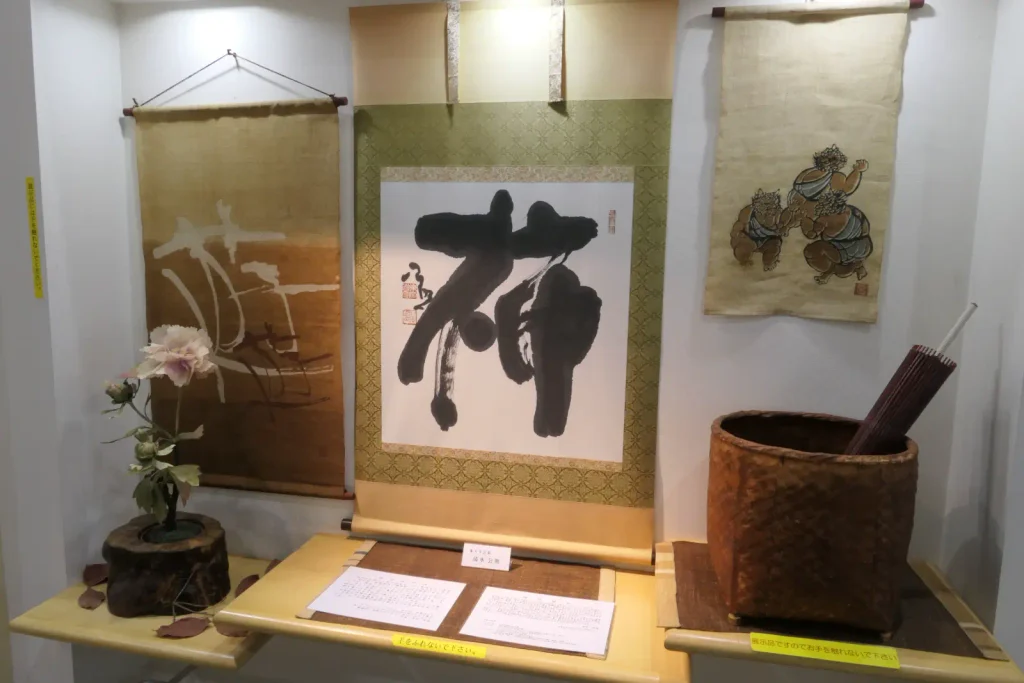
Next stop: a Michi-no-Eki, a Japanese roadside station where you can find local products, souvenirs and regional specialities.
And that’s where we fell into our second kaki trap.
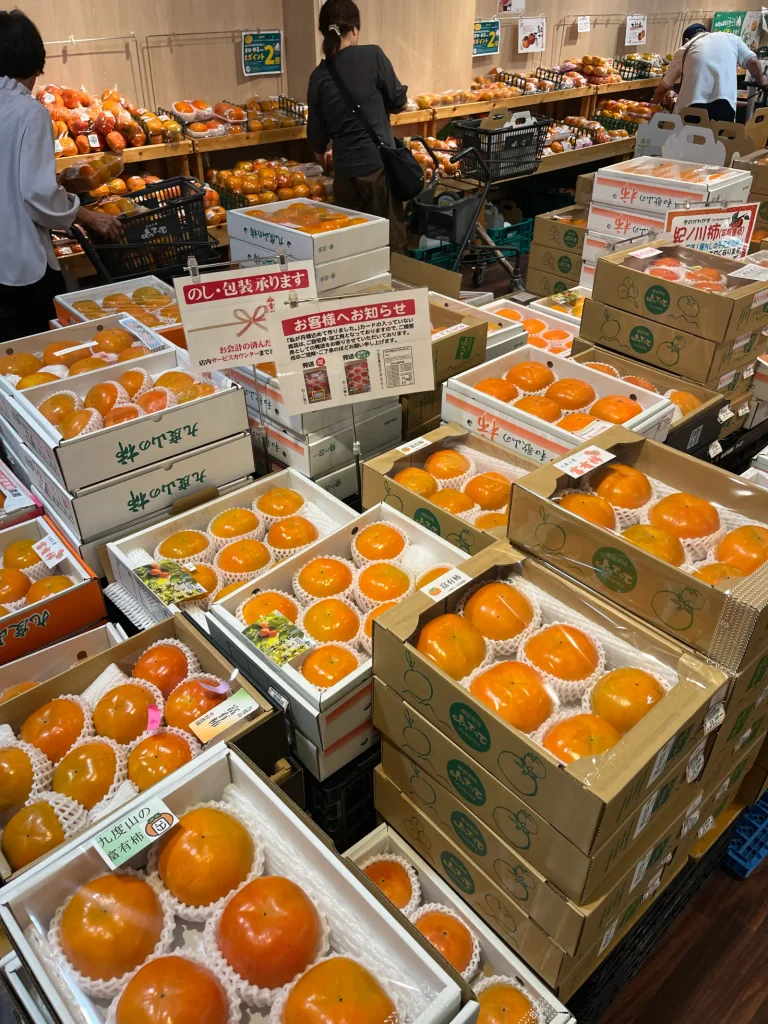

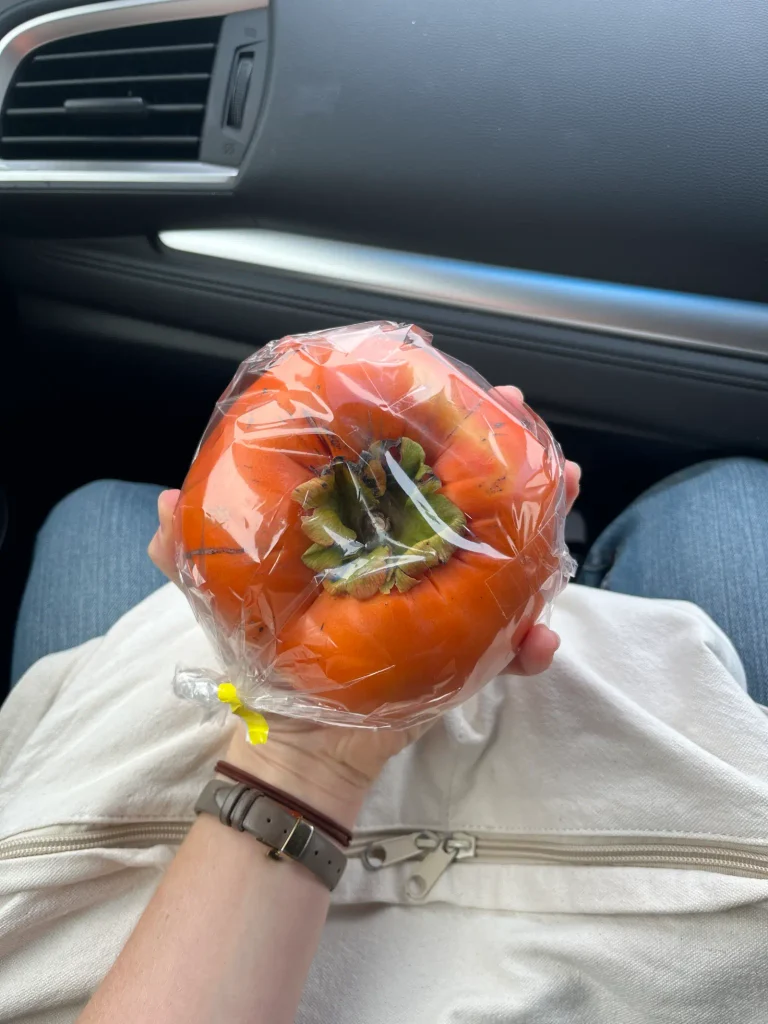
A whole shop filled with persimmons! Different shapes, sizes and varieties everywhere. Naturally, we had to investigate. We tried kaki ice cream (not my personal favourite) and discovered an absolutely HUGE persimmon, almost as big as my head.

Our trunk was becoming more and more orange with every stop. So many kakis to bring back and share with everyone at Obubu!
Little anecdote :
Here’s something I find particularly interesting: Nara is also known for its persimmon leaf tea, called Kakinoha-cha. Instead of using the fruit, the leaves are dried and prepared as an herbal infusion. Persimmon leaves have also traditionally been used to wrap Kakinoha-zushi, a local sushi speciality from Nara. This tree is offering so many possibilities, I love it!
It is said that Sen no Rikyū, the famous 16th-century tea master, served dried persimmons with green tea during his ceremonies, so if you’re more of a traditional tea lover, imagine enjoying a dried persimmon alongside a bowl of Japanese green tea like him. A lovely autumn pairing!
The rain decided to follow me once again (apparently, I’m bringing my own weather wherever I go), but it certainly didn’t stop us from enjoying the weekend.
After being surrounded by tea fields at Obubu, it was refreshing to find ourselves surrounded by persimmon trees instead. Orange fruits, green leaves and beautiful autumn landscapes everywhere.
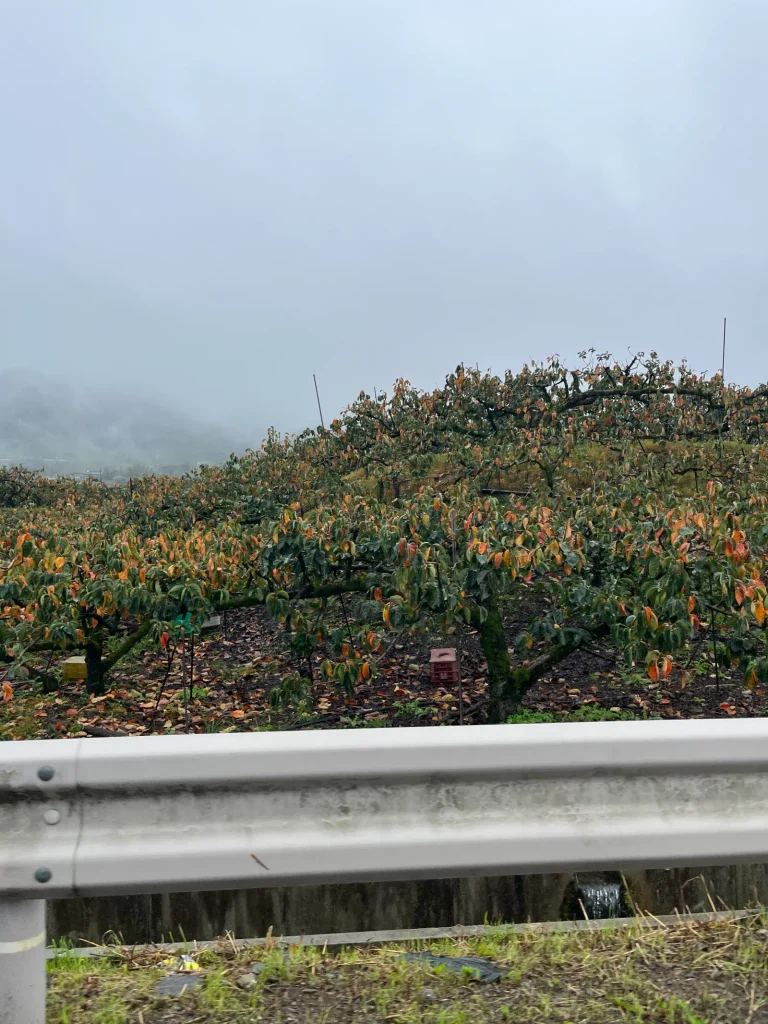
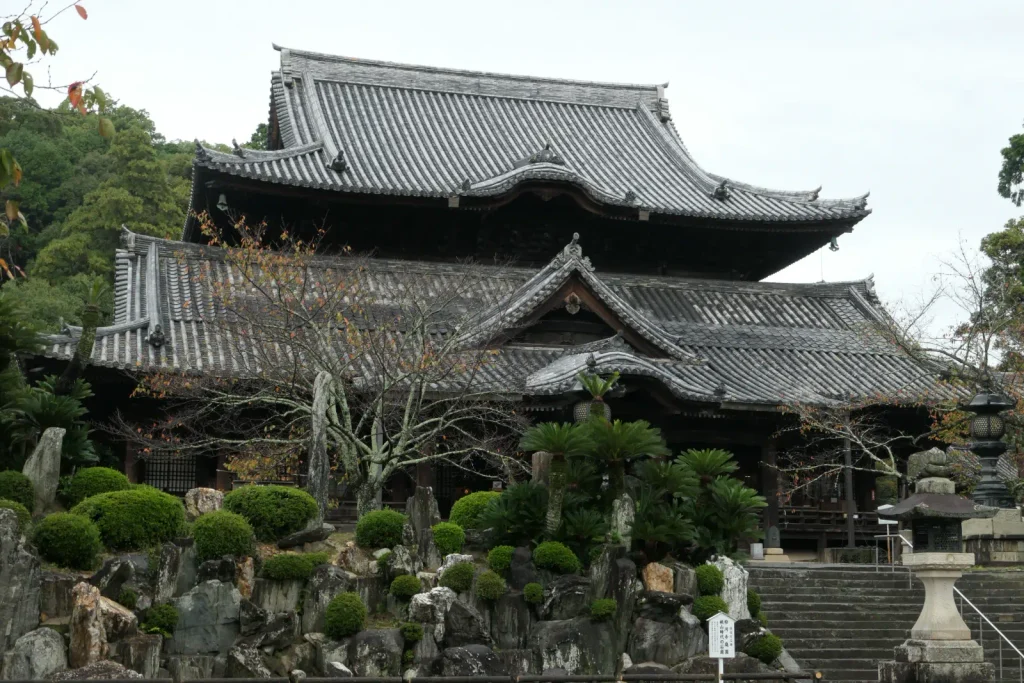
On our second day, before heading to our main activity of the day, Kaki-gari (柿狩り), which literally means persimmon picking, we decided to make a little stop near our hotel at a beautiful temple: Kokawa-dera. And what a place!
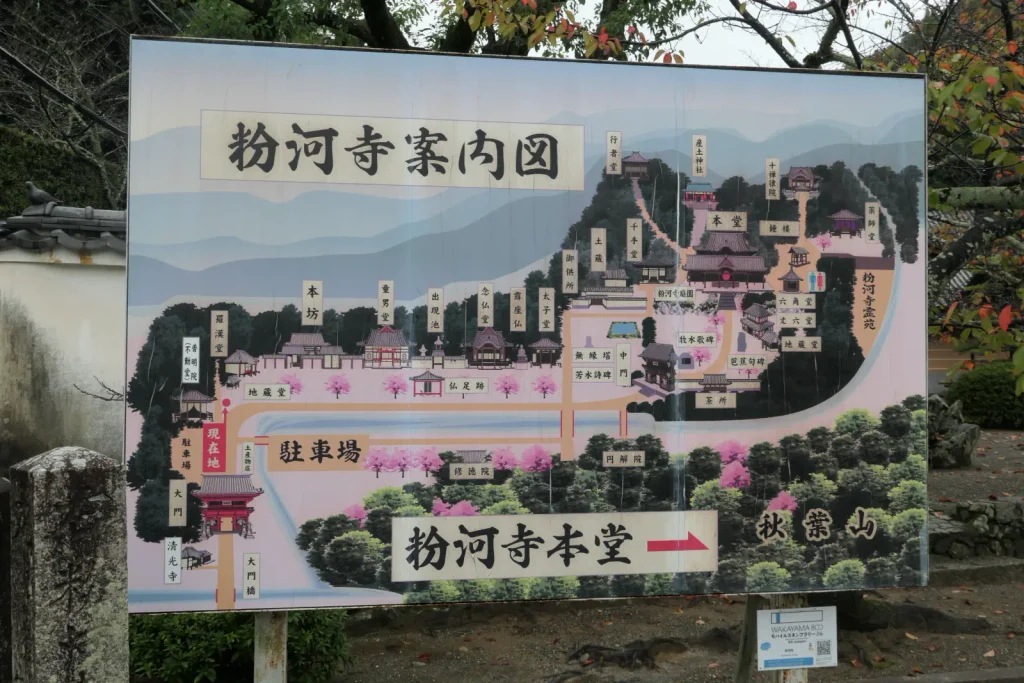
Kokawa-dera is an enormous and beautiful Buddhist temple. Unfortunately, we didn’t have enough time to explore the whole complex, but even the parts we managed to visit were absolutely mesmerising.
The architecture, the peaceful atmosphere and the beautiful surroundings made it a lovely start to our morning.
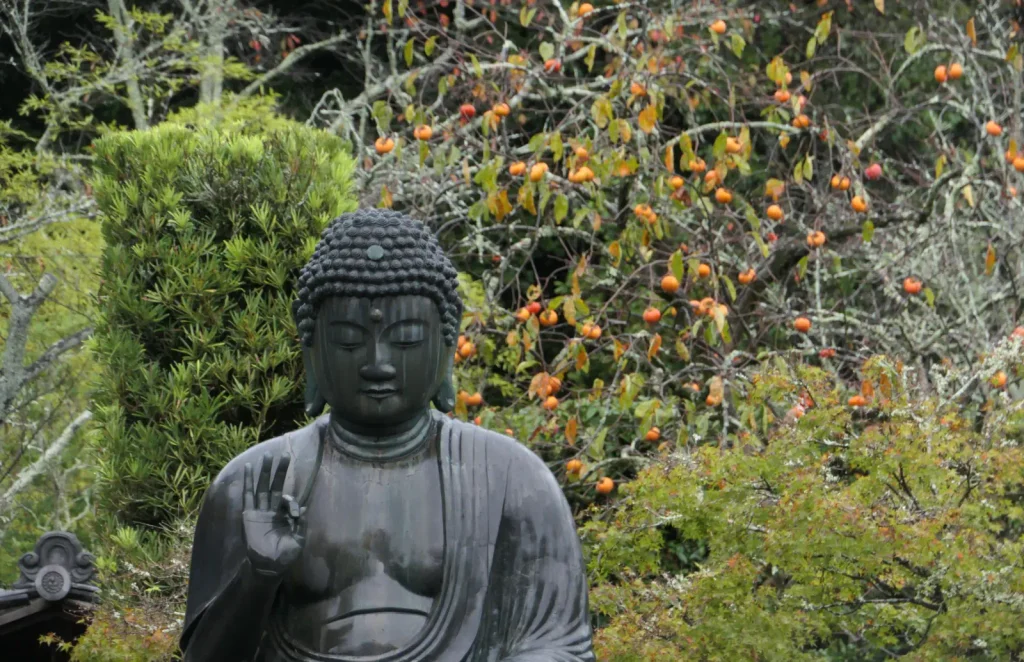
And of course, since we were still in kaki country, persimmons were everywhere! Even behind this Buddha statue. I guess there was no escaping the kaki theme this weekend.
After this little cultural stop, it was finally time for the highlight of our day: KAKI PICKING!
We had booked a picking experience at a local persimmon farm, where a lovely and gentle couple welcomed us.
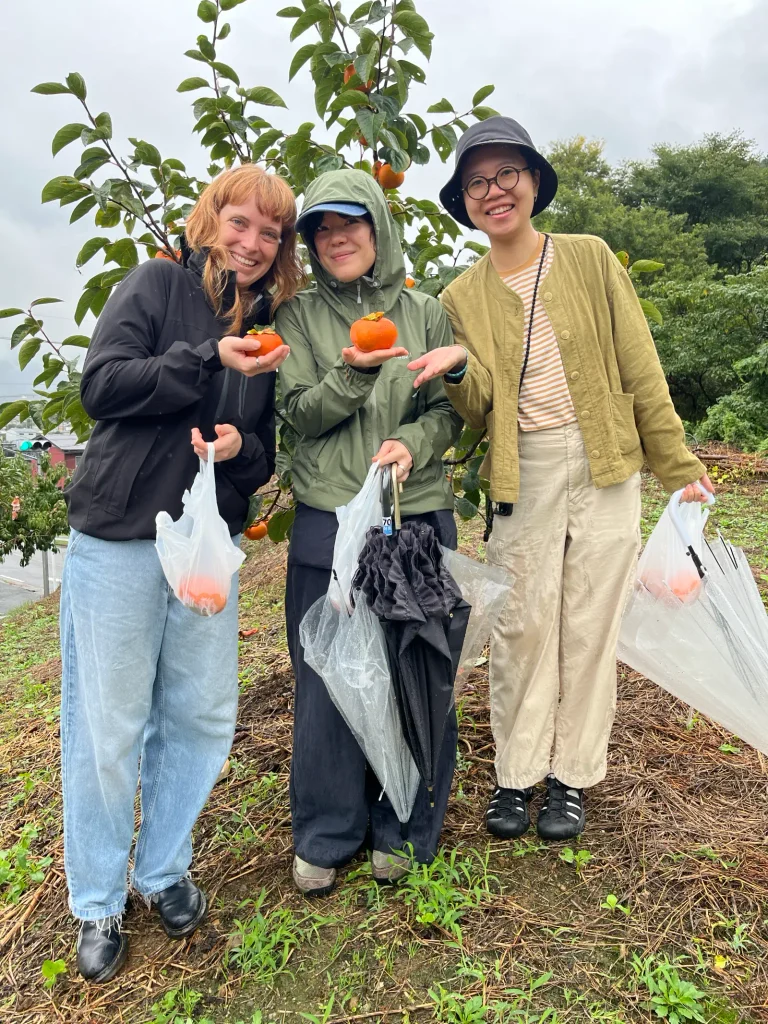
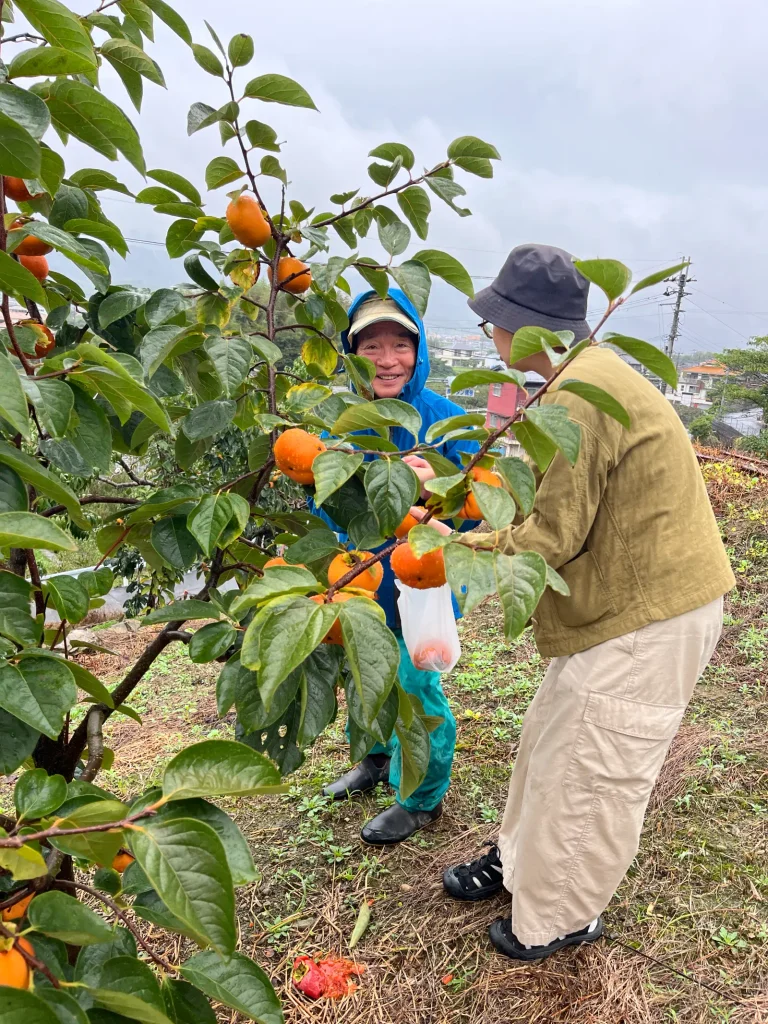
They introduced us to the different varieties growing on their farm
We got to pick several cultivars, including Fuyu, Taishu and Tonebayashi. Each variety has its own characteristics, whether in shape, texture, sweetness or ripening season.
We were so excited and full of joy.
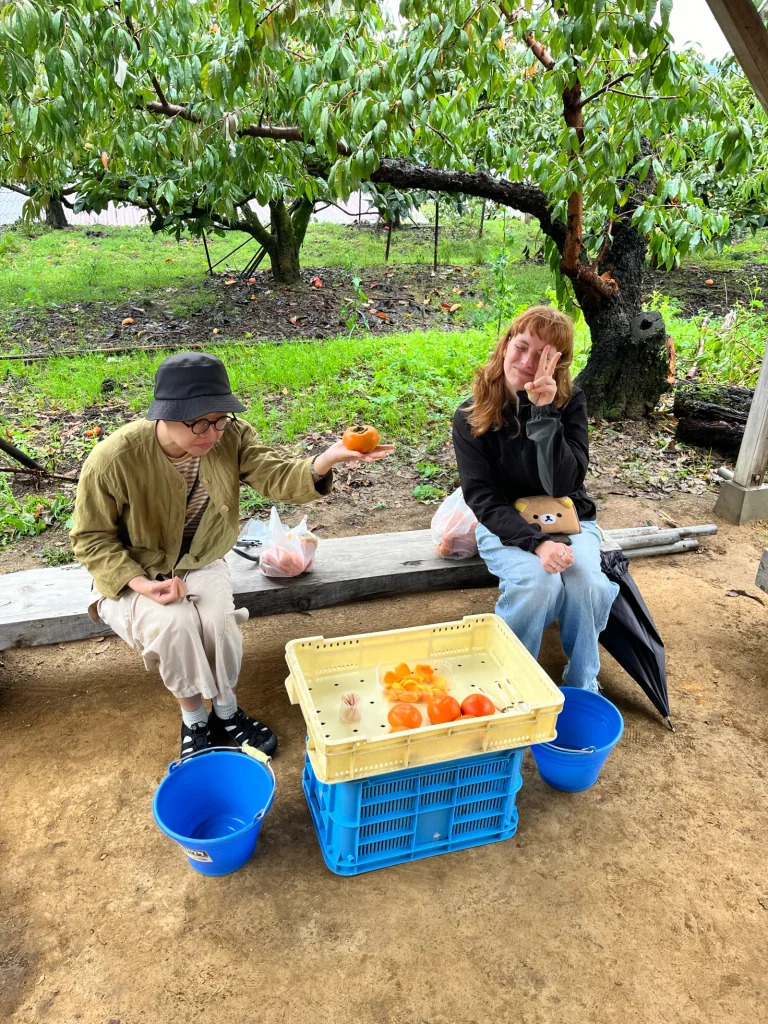
And the best part? We weren’t just allowed to pick them. We also got to taste so many!
We were like children in a candy shop, except the candy was orange and growing on trees. We were so excited, happy and probably eating way too many persimmons. But honestly, can you blame us?
After filling our bags, we enjoyed a little tasting session.
Once our picking experience was over, we jumped back into the car and decided to explore the surrounding area a little more.
Our destination was a small mountain village famous for its traditional dried persimmons. We were hoping to discover more about this local tradition and see how these beautiful orange fruits are transformed into a delicious winter treat. Unfortunately, we made one tiny mistake: we picked the wrong day to visit. Everything was closed!
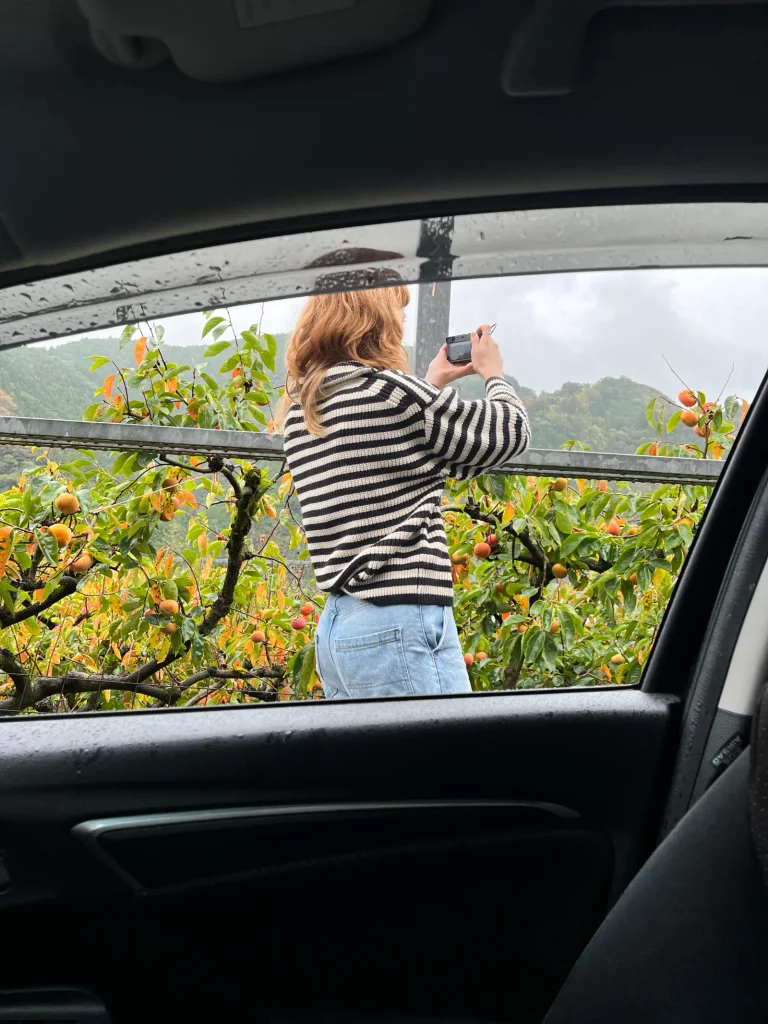
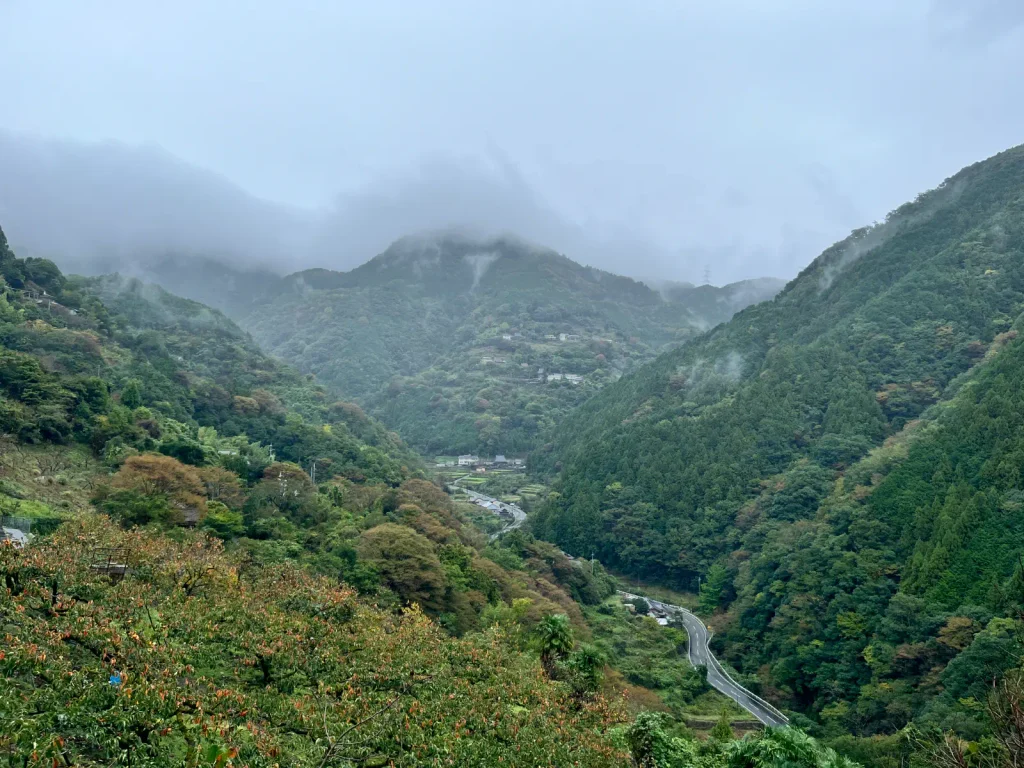
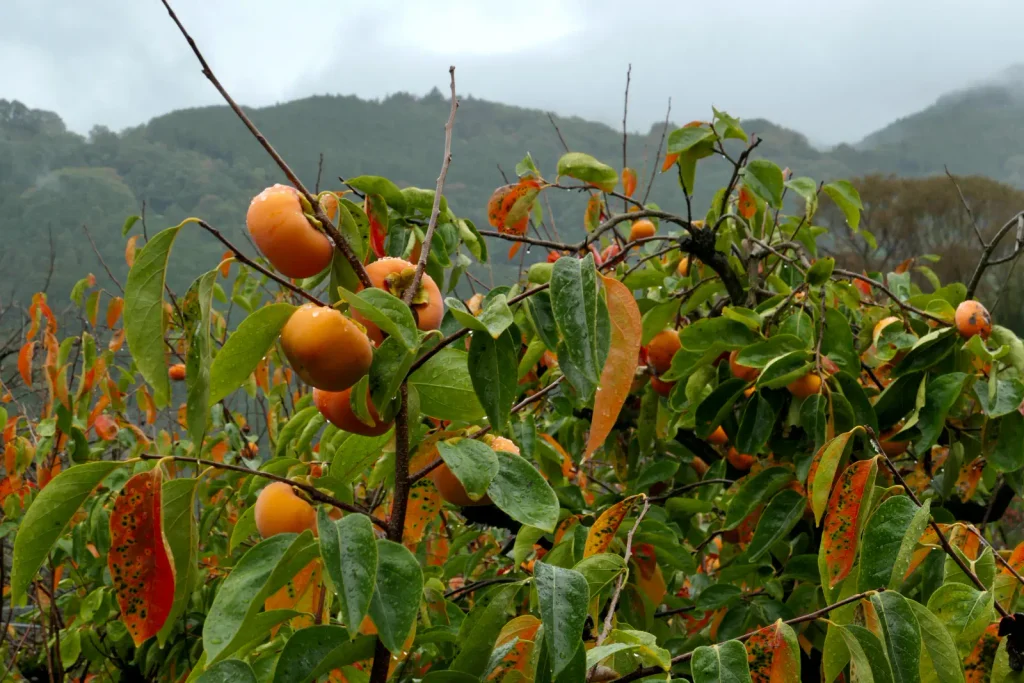
But even though we couldn’t explore the village as planned, the drive itself was absolutely worth it.
Just look at those colours! The mountains, the trees, the little villages and all the shades of autumn. It felt like driving through a postcard.
And with our hearts full of beautiful memories and our minds full of kaki knowledge, we slowly made our way back.
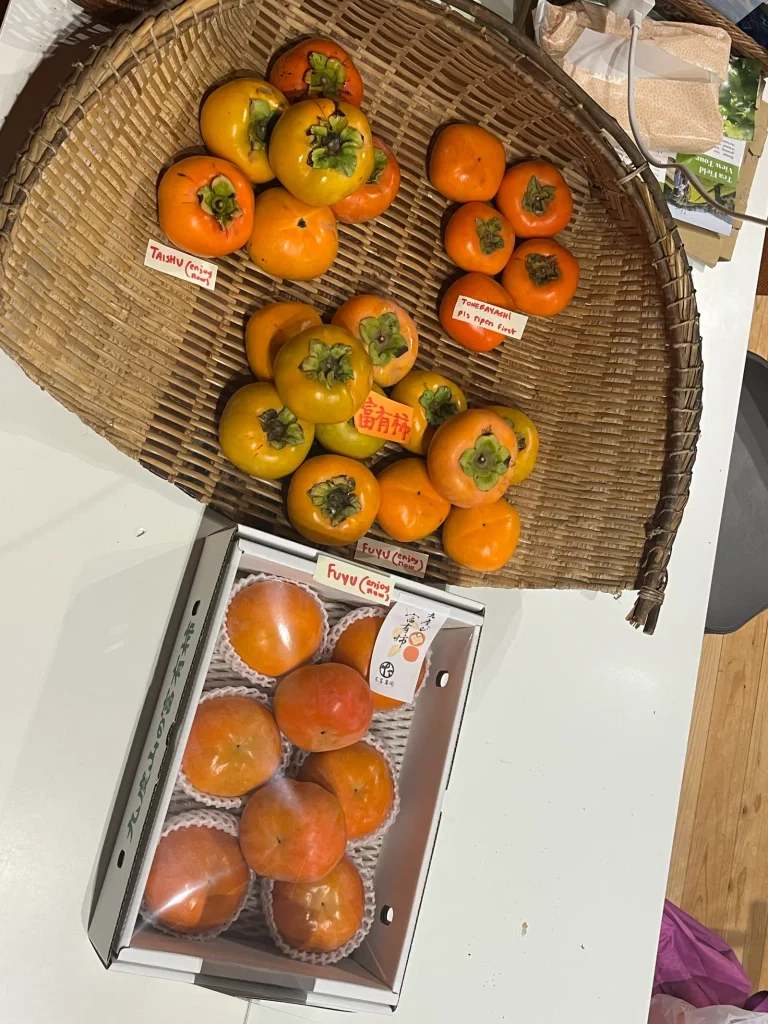
Of course, we couldn’t keep all these delicious kakis to ourselves. We brought back a whole bunch to share with everyone at Obubu, so our teammates could enjoy a little taste of our adventure too.
And I have to admit, I’m becoming more and more addicted to this fruit after this weekend.
So, what do you think? Does this little kaki adventure make you want to visit Wakayama too? I hope I’ve made you curious to discover this beautiful region. Until the next adventure, dear reader!