
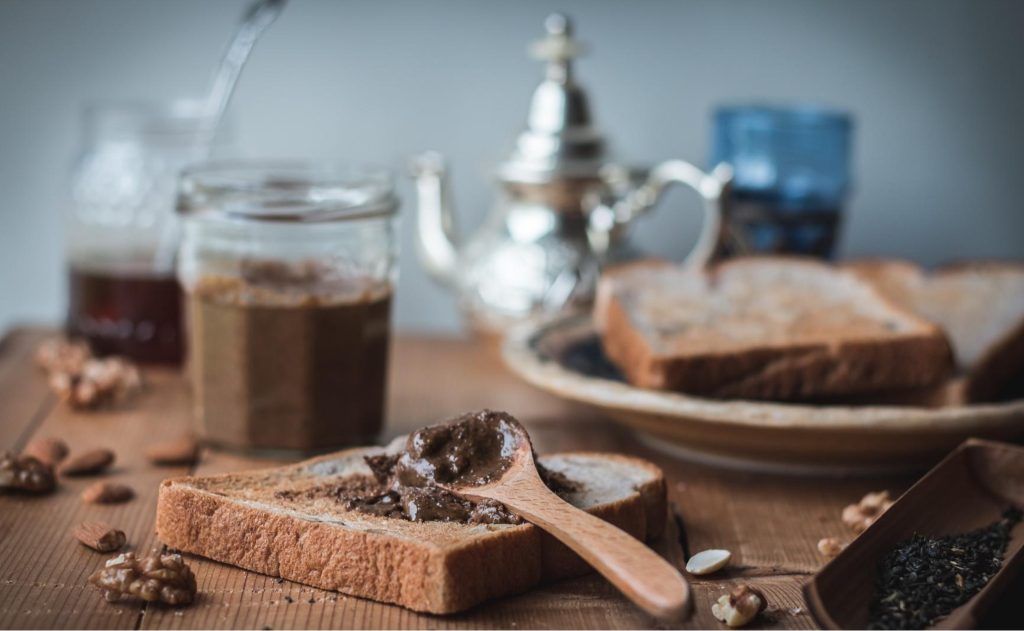
If you have ever joined one of our tea tours, you might have heard about our famous Wakoucha Amlou (Moroccan almond-honey spread with Japanese black tea)! This delicious creation comes from Hajar Hour (Morocco, #104), one of our treasured former interns and an incredible pastry chef. Her beautiful tea-inspired sweets have made their way into many of our tea tour presentations, featuring all kinds of delicious creations made with our tea powders. We still talk about Hajar and her wonderful creations fondly at Obubu, and this recipe is one of our favourites.
Recently, we started organising staff lunches for our interns, Assistant Managers (AMs), and staff, creating opportunities to share homemade meals and experiment with tea in the kitchen. Thanks to our excellent café lead, Tran, these lunches have become a wonderful way to bring everyone together over food.
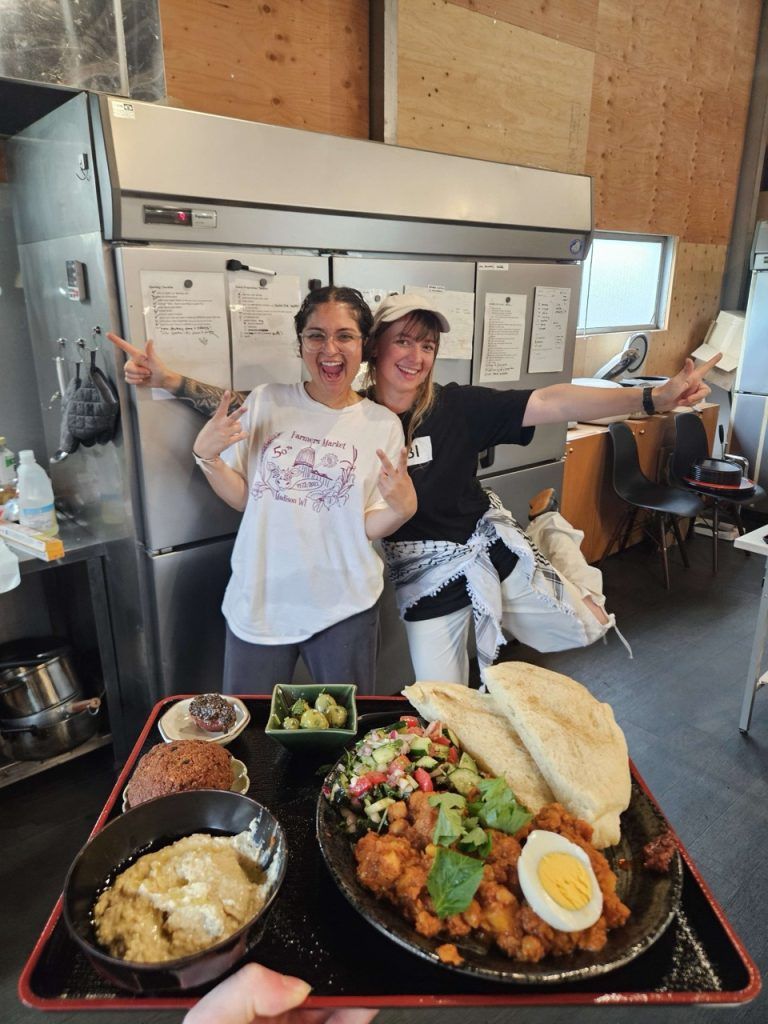
For my first lunch, I decided on a Middle Eastern-inspired feast. Having lived in Egypt for almost a year, I have to admit that I really miss falafel and hummus here in Japan. I have also been visiting one of my favourite restaurants in Nara, the Tunisian restaurant SAHHA, quite often. Its owner, Imad, kindly offered to help me prepare falafel base in his kitchen.
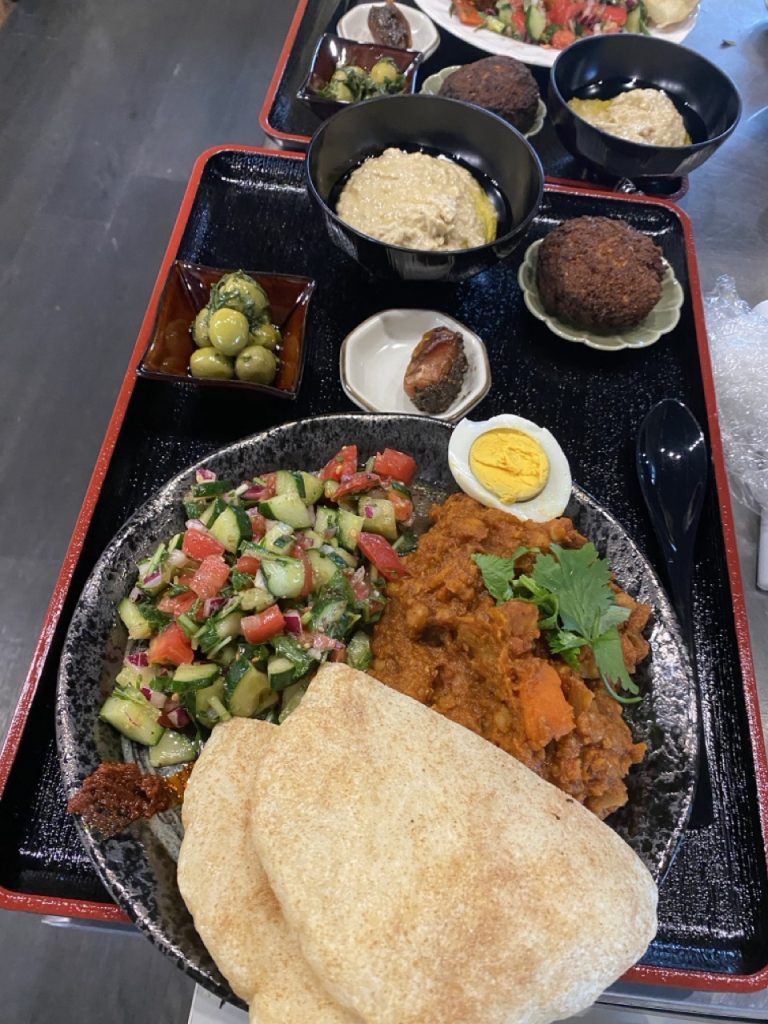
The lunch brought together dishes inspired by Tunisia, Lebanon, Palestine, Egypt, Morocco, and Türkiye, including hummus, stews, breads, salads, and falafel. I was incredibly lucky to have Garance helping with the preparations the day before, Imad sharing his falafel expertise, Maren helping me bake 30 pieces of Egyptian baladi bread (no small feat when only one piece fits in a tiny oven!), and Dhvani, our official falafel frying master, helping with all the cooking on the day.
I could happily spend the entire blog telling stories about the lunch, but let’s stop beating around the bush get to the recipe!
Among the dishes we served was Wakoucha Amlou, spooned into dates and enjoyed alongside Maghrebi-style mint tea made with our Spring Sun Sencha for a Japanese twist. It was the perfect opportunity to revisit Hajar’s creation and finally share the recipe we talk about so often at Obubu.
What Is Amlou?
Amlou is a traditional Moroccan spread made with almonds, honey, and argan oil. Rich, nutty, and naturally sweet, it is traditionally served as a dip with Moroccan bread and makes a delicious addition to breakfast or a snack.
Our version adds wakoucha powder, made from Japanese black tea, bringing a distinctive tea flavour to the rich almond base. The result is a lovely meeting of Moroccan recipe and Japanese tea, with the amount of tea easily adjusted to suit your taste.
Ingredients
- 3 cups raw almonds
- ¾ cup honey
- ¾ cup culinary argan oil, or extra virgin olive oil as a substitute
- 2–3 tablespoons wakoucha powder
- A pinch of sea salt
- A little water, to mix with the wakoucha powder
Instructions
1. Toast the almonds.
Preheat the oven to 175°C (350°F). Spread the raw almonds on a baking tray and toast for approximately 7–10 minutes, stirring occasionally to prevent burning. They should become fragrant and lightly golden. Allow them to cool for a few minutes. You can also try this on a pan if oven is not accessible.
2. Make the almond butter.
Transfer the almonds to a food processor and blend until they turn into a smooth, creamy almond butter. This can take around 8–10 minutes or longer, depending on your food processor. Pause occasionally to scrape down the sides, and be patient as the almonds gradually release their natural oils.
3. Prepare the wakoucha paste.
In a small bowl, mix the wakoucha powder with a little water until it forms a smooth paste. Start with a small amount of water and add more as needed. You can adjust the quantity of powder depending on how prominent you want the black tea flavour to be.
Start with two tablespoons of wakoucha powder and add more if you want a stronger black tea character. Mixing the powder into a paste first helps it incorporate more evenly into the almond mixture.
4. Combine the ingredients.
Transfer the almond butter to a mixing bowl. Gradually add the honey, argan oil, and wakoucha paste, mixing with a spatula until everything is well combined. Add a pinch of sea salt and taste. If you prefer a sweeter spread, simply add a little more honey. Traditional Amlou is relatively fluid and is usually served as a dip. If you prefer a thicker spread, reduce the amount of oil gradually until you achieve the consistency you want. If it becomes too thick, add a little more oil and mix well.
5. Adjust and serve.
Mix until you reach your preferred consistency. Serve immediately or transfer to a clean container for later enjoyment.
Shortcut idea! If you want to prepare a small portion without toasting and blending almonds, store-bought almond butter works well. Just make sure it is unsweetened so you can control the balance of honey and tea.
How to Enjoy Wakoucha Amlou
Traditionally, Amlou is served with Moroccan bread, making it a wonderful spread for breakfast or an afternoon snack. You can also enjoy it with whole-grain bread or use it as an alternative to peanut butter or chocolate-hazelnut spreads.
Here are a few more ways to enjoy it:
- Stuffed dates: Spoon Wakoucha Amlou into dates for a naturally sweet, nutty treat. This was our way to serve it at the staff lunch!
- Fruit dip: Serve alongside apple slices, bananas, or other fresh fruit.
- Breakfast spread: Add it to toast, pancakes, or porridge for a rich, nutty flavour.
- Salad dressing or drizzle: Thin it with a little extra oil or water to create a creamy dressing or drizzle.
And, of course, try pairing it with a cup of Japanese tea!
One of the things we love about experimenting with tea is discovering how it connects different ingredients, food traditions, and cultures. Wakoucha Amlou is a lovely example: a traditional Moroccan spread reimagined with Japanese black tea, inspired by the creativity of one of our former interns.
Whether you enjoy it with bread, spoon it into dates, or serve it alongside a cup of Japanese tea, we hope this recipe inspires you to bring a little tea into your own kitchen.

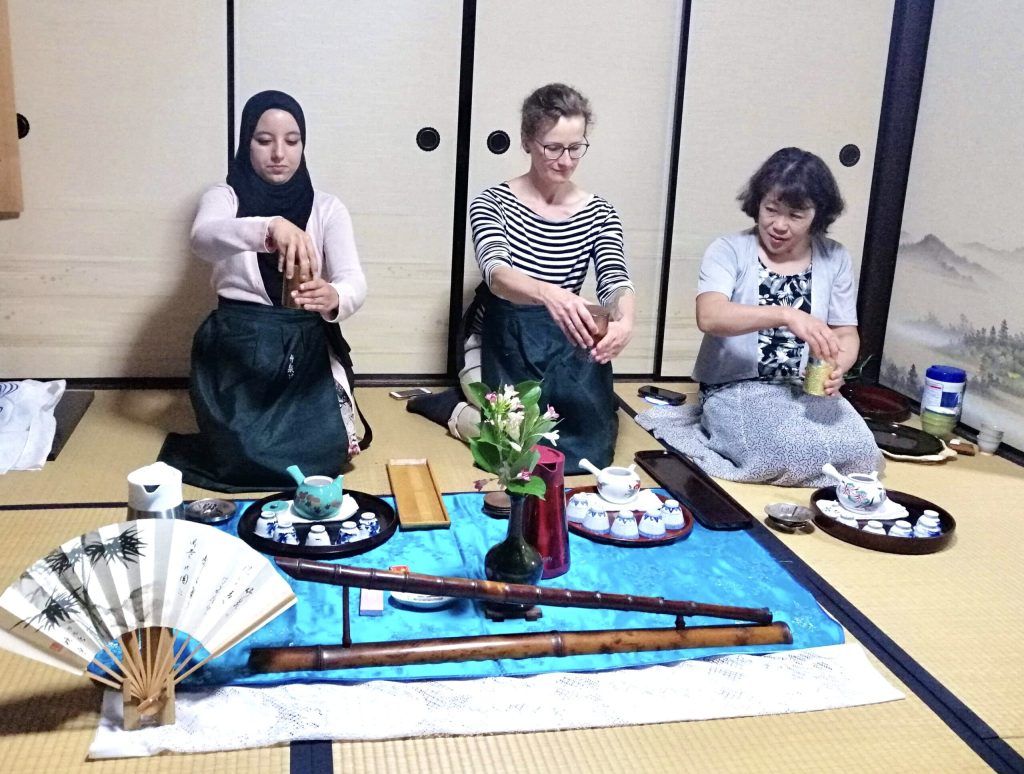
Hajar with Akky-san, Kon-chan, Nakai-sensei, and her co-intern Melanie (2019).