Hello everyone, welcome to my project blog! I am Glenda, intern #222 from Singapore and part of Obubu’s 2026 Spring intern batch.
Before arriving to Obubu, I spent so much time reading intern blogs and looking through past projects on the website. There were so many projects that interested me, but when it came time to choose, I remember David/DJ telling me, “Having the opportunity to work with Kayo-san is something I would jump on immediately.” So yes, I chose to work with Kayo-san (mother of Obubu, or as described by everyone during a LOTR movie night — Arwen when she first appears in LOTR).
When I first arrived here, I was still almost a complete beginner to Japanese tea. During those first few weeks, I constantly felt like I was trying to catch up with the amount of knowledge around me. Not just during tours or classes, but during meals, tea breaks, field work, and random office conversations. Everyone here somehow carries so much information so casually. Tea cultivars, processing methods, brewing temperatures, weather patterns, geology, harvest seasons. It honestly felt endless in the best way possible.
All this time, I had already been thinking about making some kind of zine or illustrated publication to document my experience here. I think I wanted a way to hold onto everything I was learning before it all blurred together. So when this postcard project came up, it definitely felt fitting. It was a great way to combine learning, art, and the sense of connection I was experiencing here.
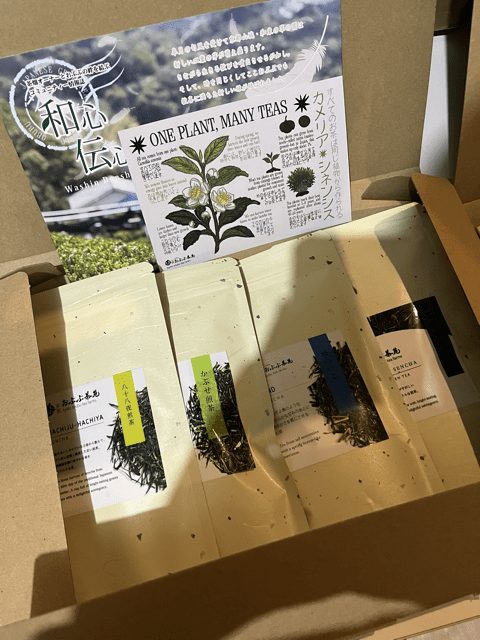
The project was to create a set of four seasonal postcards for Obubu tea club members that would be included in tea club packages throughout the year. I wanted the postcards to feel informative, but also personal. Something people would keep instead of immediately throwing away and something that could quietly live on a fridge door or be tucked into a notebook long after the tea itself was gone.
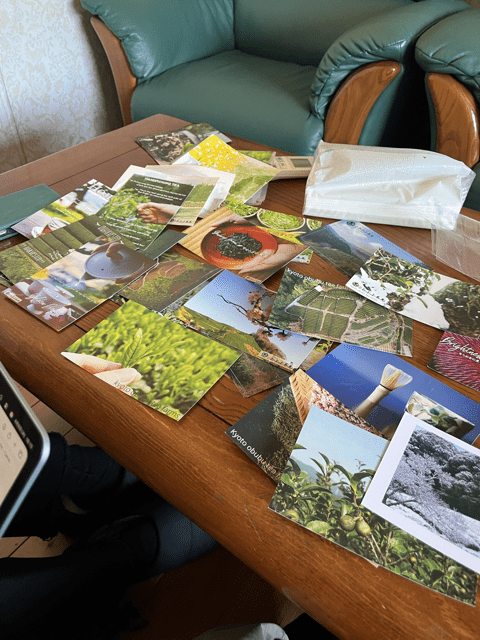
During my first meeting with Kayo-san, she brought out stacks of previous Obubu postcards. Many were beautiful photographs of the farm. Some reflected the seasons they were sent in, while others had little annotations or educational elements. After showing me everything, Kayo-san basically just looked at me and said, “Do anything you want girl~~”
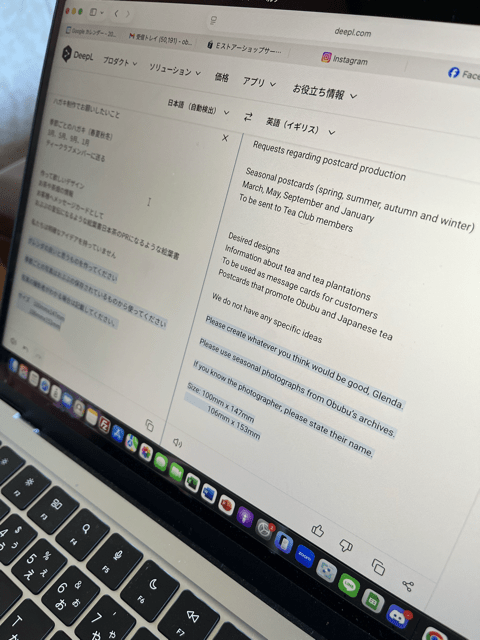
At first, I had too many ideas: photography-based cards, collages, interactive cards, full illustrations. But the more I thought about it, the more I realised that what excited me most was the educational side of tea. I kept thinking about how much I had learned in such a short amount of time, and how fun it felt discovering all these tiny details about something I previously knew almost nothing about. I wanted the postcards to feel like accessible information that someone could slowly enjoy and understand. Something someone might pin on a wall or leave on a table, and later end up discussing with a friend over tea.
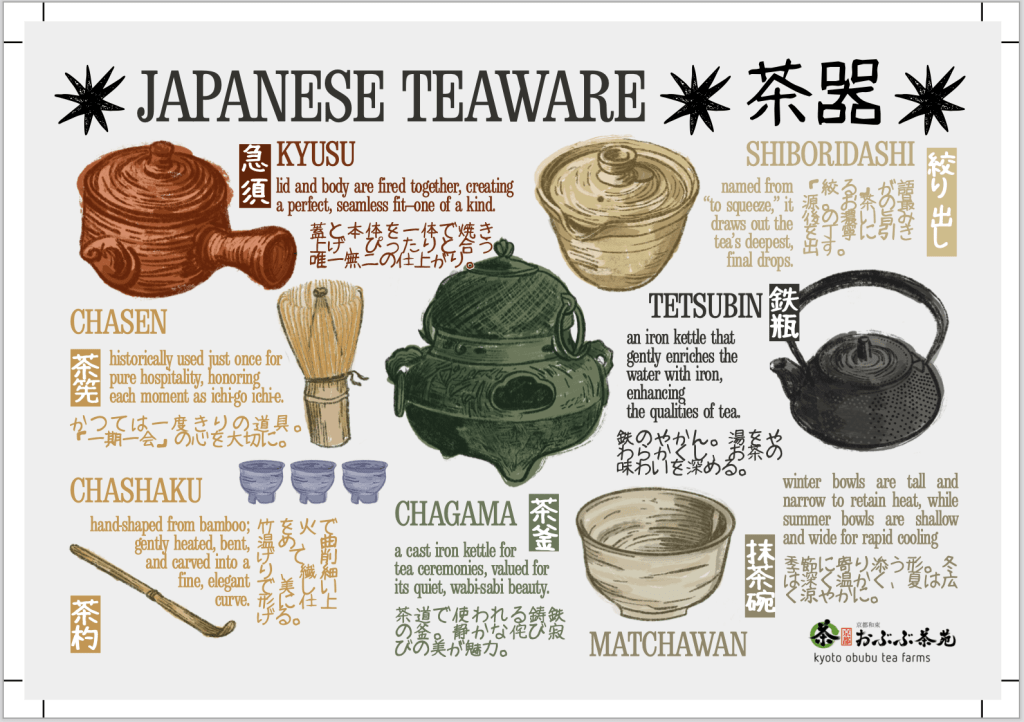
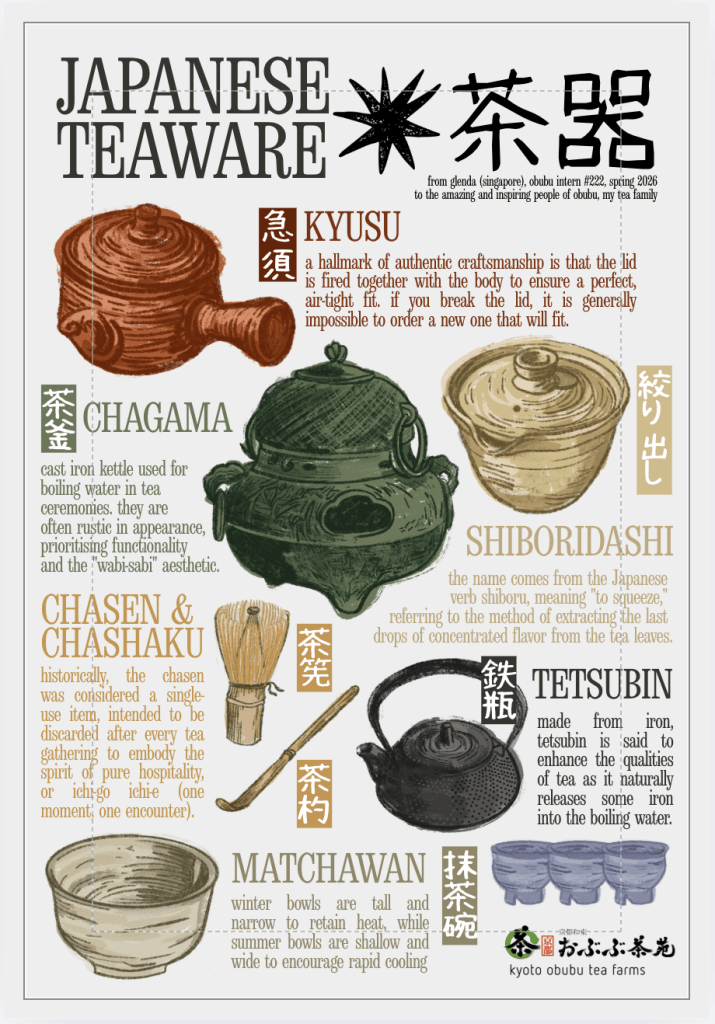
The first postcard I designed was the teaware card, and honestly I mostly just followed instinct with it. Once I found the visual direction for that card, the rest of the series slowly started making sense too.
A lot of the inspiration came from vintage botanical and scientific illustrations. Coming from an environmental science background, and suddenly spending every day surrounded by tea fields and the Camellia sinensis plant, I think my brain naturally gravitated there. I loved the careful annotations and labelled diagrams found in old scientific illustrations — the way they made information feel beautiful and approachable at the same time. I actually wanted the drawings to feel more rough and linocut-inspired, but somewhere along the process I got completely carried away drawing tiny details into everything (oops).
The first versions of the postcards were only in English and had a portrait layout. After discussing with Kayo-san, we decided to include Japanese annotations as well since domestic tea club members would also receive them.
Postcard #1 Japanese Teaware, after Kayo-san’s suggestions and feedback!
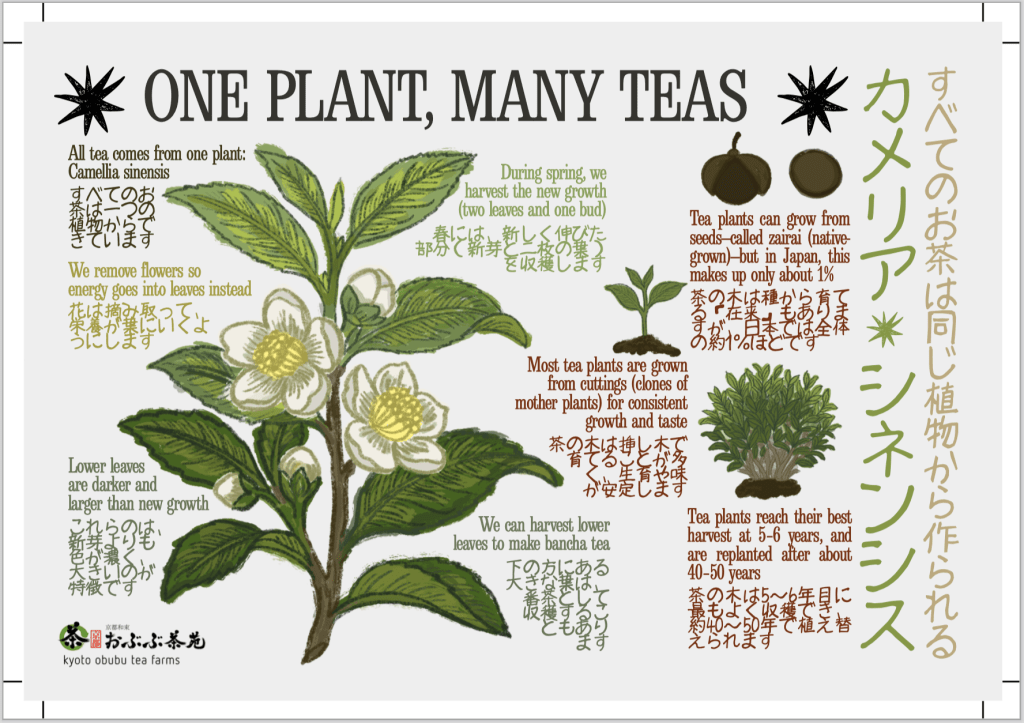
One of the postcard themes is the life cycle of a tea bush. Around that time, I had just attended Japanese Tea Basics #3 (Obubu’s educational curriculum for interns) and had become extra curious about tea agriculture and the long-term growth of tea plants. We had also recently finished planting baby tea bushes, so suddenly all the conversations about cultivars and zairai started becoming much more meaningful to me. I think people at Obubu are so passionate about tea that you naturally start absorbing knowledge just by being around them. Especially people like Pau-san lol.
Originally, the tea bush postcard had far too much information on it. I kept wanting to include every interesting thing I learned: tea ages, replanting cycles, soil, weather conditions in Wazuka, harvest timing. Eventually I had to accept that postcards are physically very small objects (manz…).
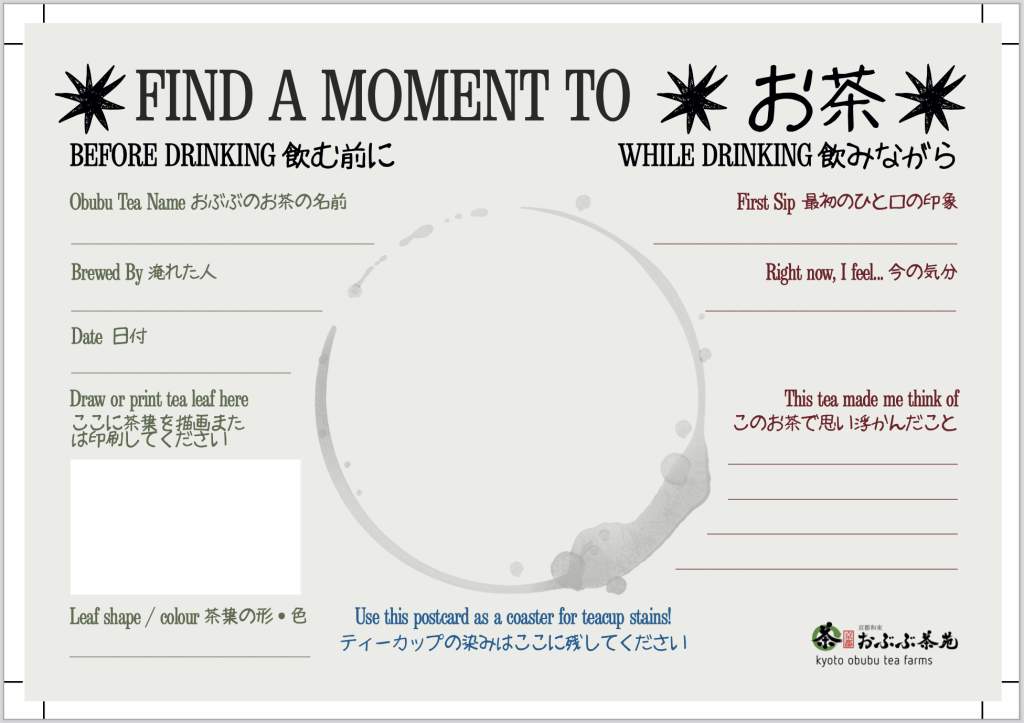
Another postcard idea came from brainstorming with my amazing mentor Marusya about an interactive postcard that could double as a coaster, where tea stains themselves would slowly become part of the artwork over time. I loved that idea immediately because it reminded me so much of the rhythm of daily tea here.
Fun fact, at the start of my internship, I actually tried keeping track of every tea I drank each day — what tea it was, who brewed it, where I drank it, how many cups I had. I gave up after about a week because it became genuinely impossible. There is just constantly tea around you here. But I think giving up on documenting every detail also allowed me to enjoy the experience more naturally. Tea slowly became less about recording information and more about presence and routine.
The final postcard idea came from pure confusion.
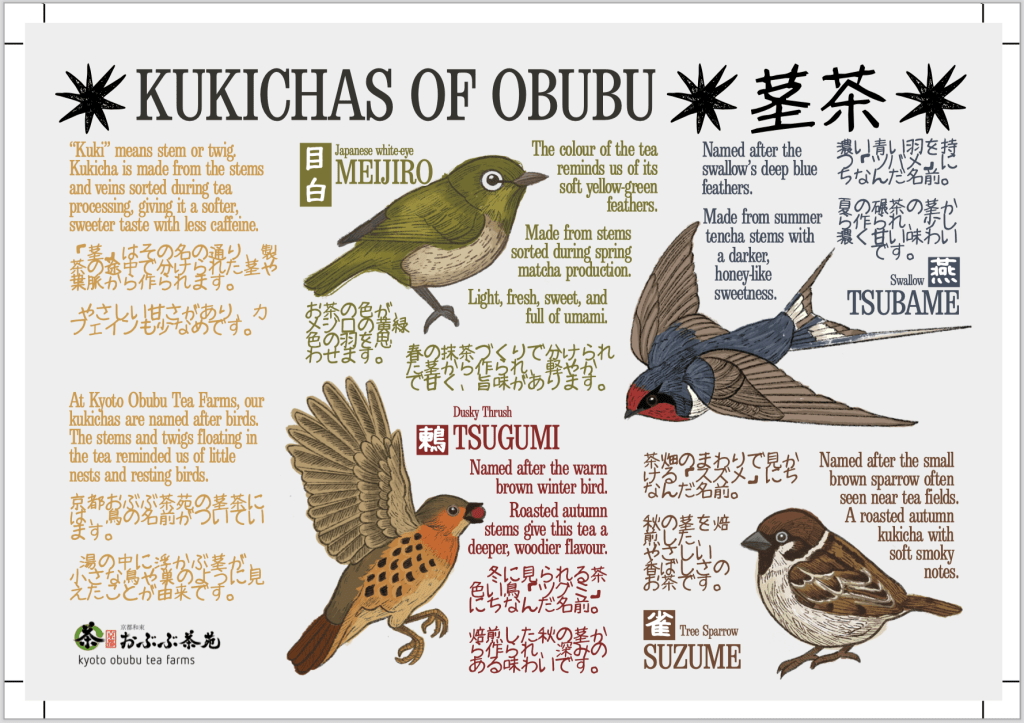
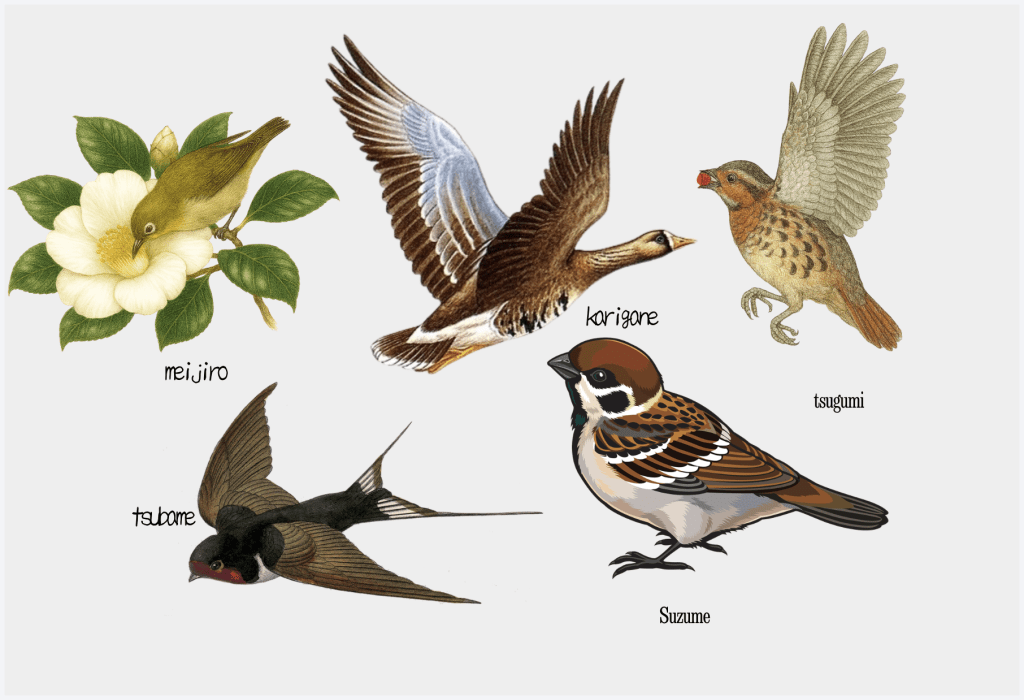
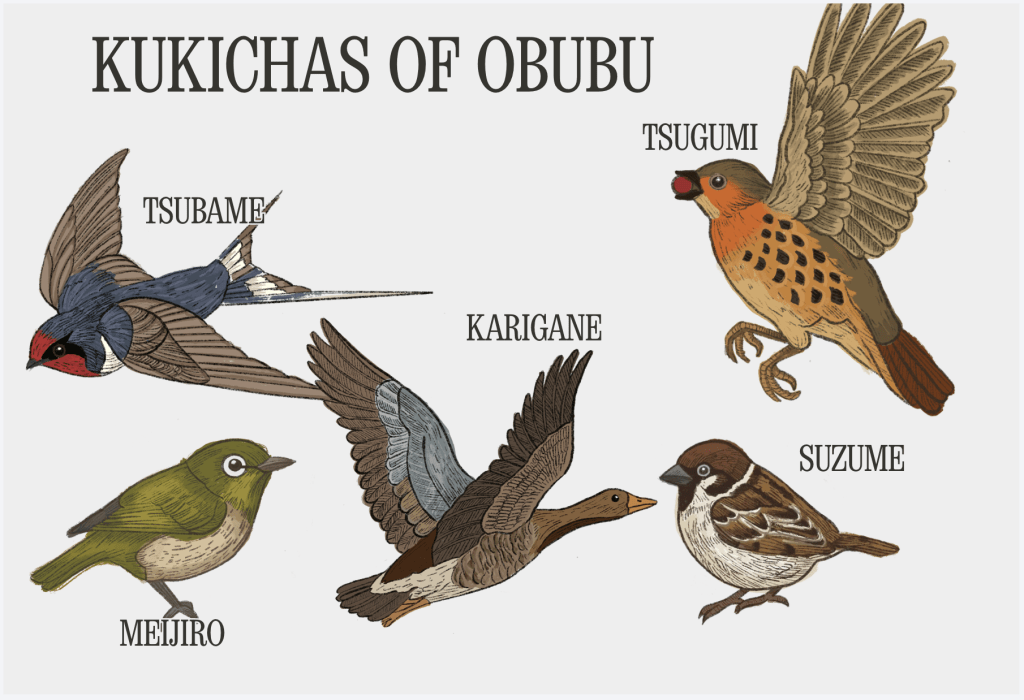
I kept mixing up all of Obubu’s kukicha names and finally decided I needed to draw them all out for myself once and for all. That postcard also ended up becoming heavily informed by Maren’s (#linguisticslegend) previous blog post as an intern, which helped me untangle the differences between everything. My original sketches included karigane too, but there simply wasn’t enough space in the final composition.
[3 May 2026]
One of my favourite parts of this project was how many people became part of it along the way. I was constantly showing unfinished drafts to interns and assistant managers and asking for opinions on spacing, readability, or whether something visually made sense. The postcards slowly became shaped by everyone’s small comments and suggestions which is really cute.
The postcards were sent for printing during Week 11 of my internship and arrived during Week 12.
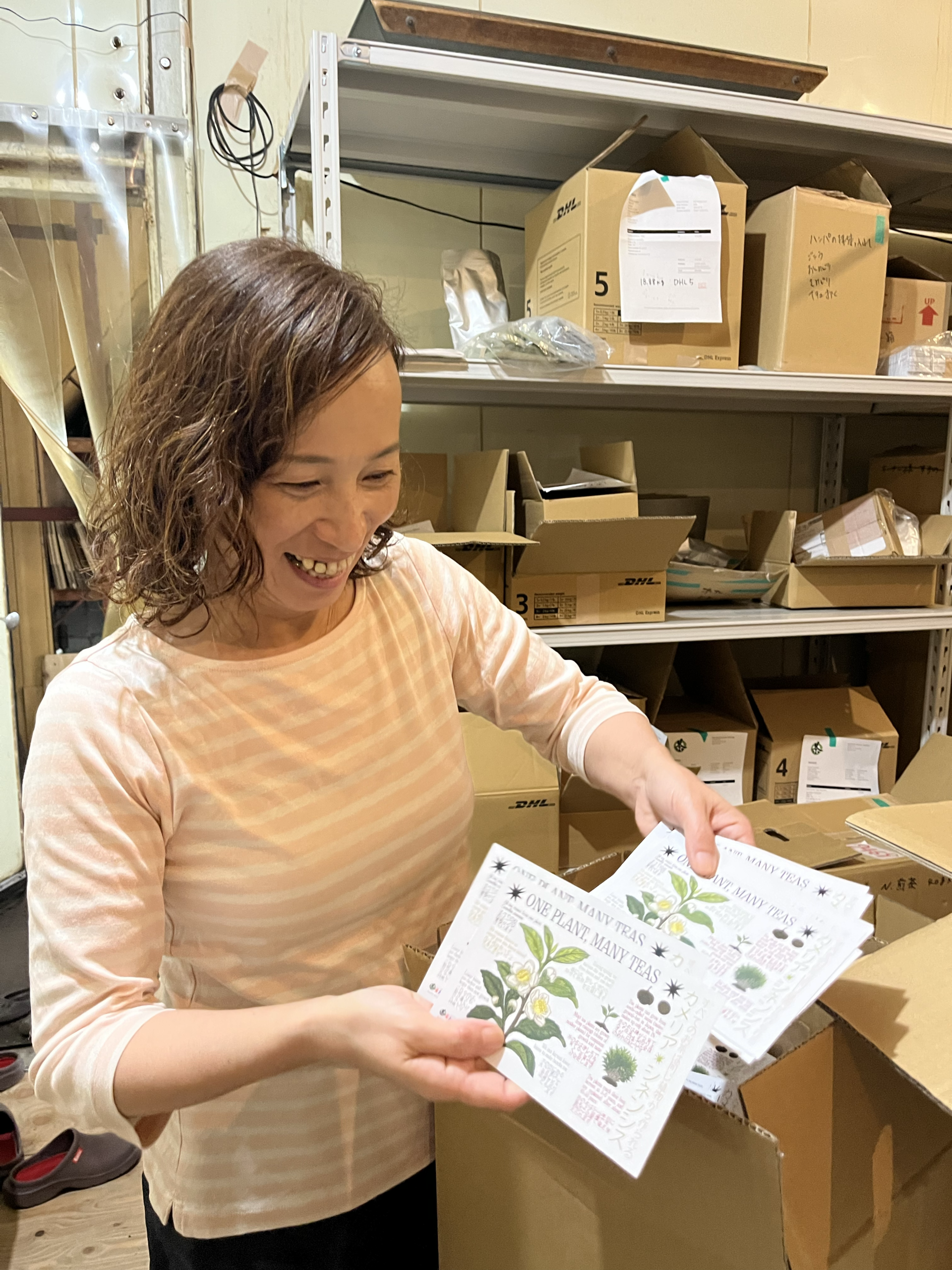
I’m writing this on May 26th, after finally seeing the printed postcards for the first time earlier today. We packed around 300 tea club boxes this morning, and it felt strangely emotional seeing the postcards stacked neatly inside them, ready to be sent out to hundreds of tea club members around the world.
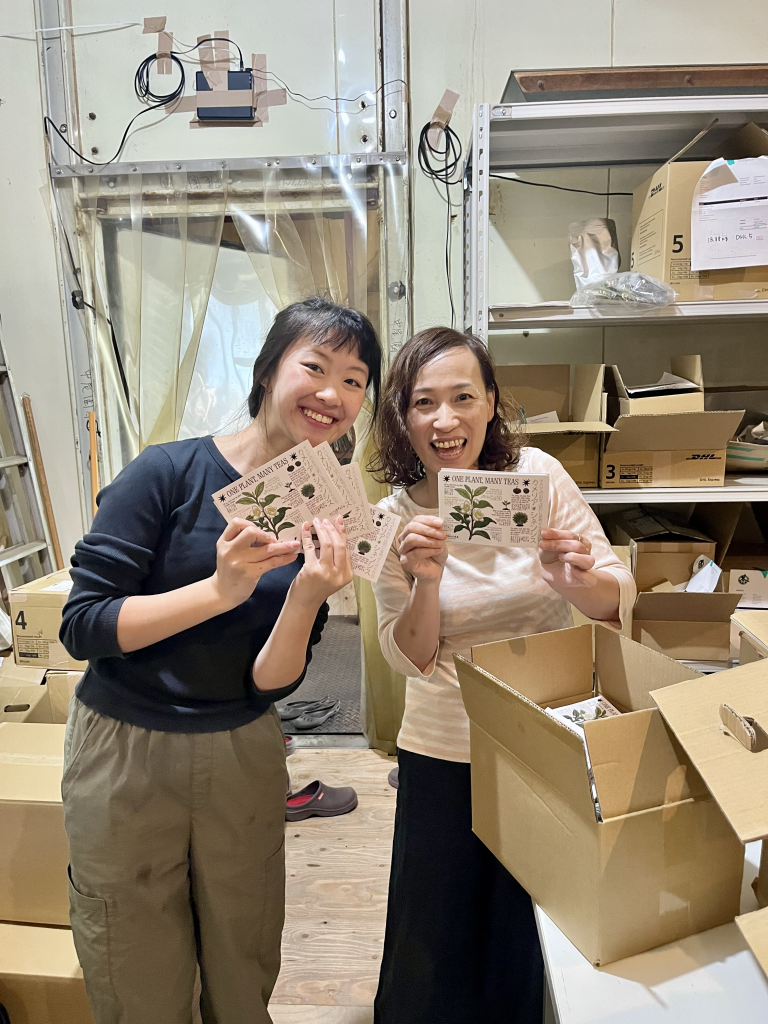
I think what makes me happiest is that this project became a real labour of love.
It could have easily been done much faster and much more simply, but I wanted to spend time on the tiny details because they mattered to me. Every little annotation, drawing, awkward spacing adjustment, and rewritten sentence came from a place of curiosity and care.
Thank you Obubu for teaching me everything I know about Japanese tea.
I hope these postcards can carry even a small piece of that curiosity, warmth, and joy to people far away from Wazuka.
And honestly… I already cannot wait to receive my own postcards from Obubu once I return home ♡
A little piece of my new home away from home!
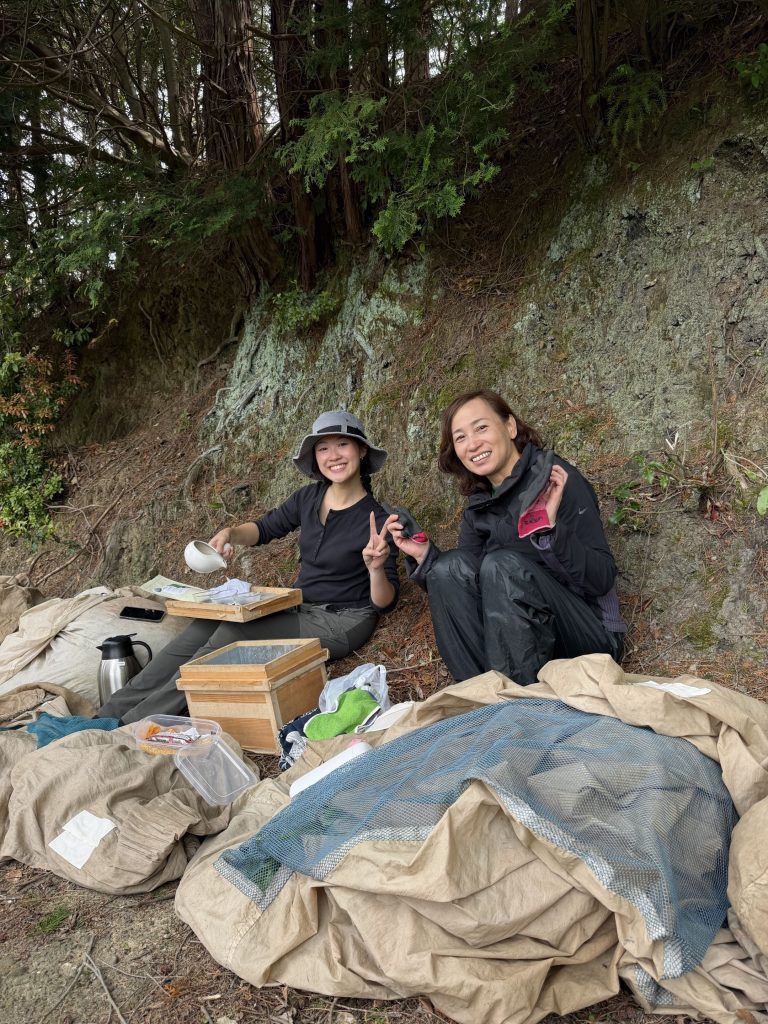
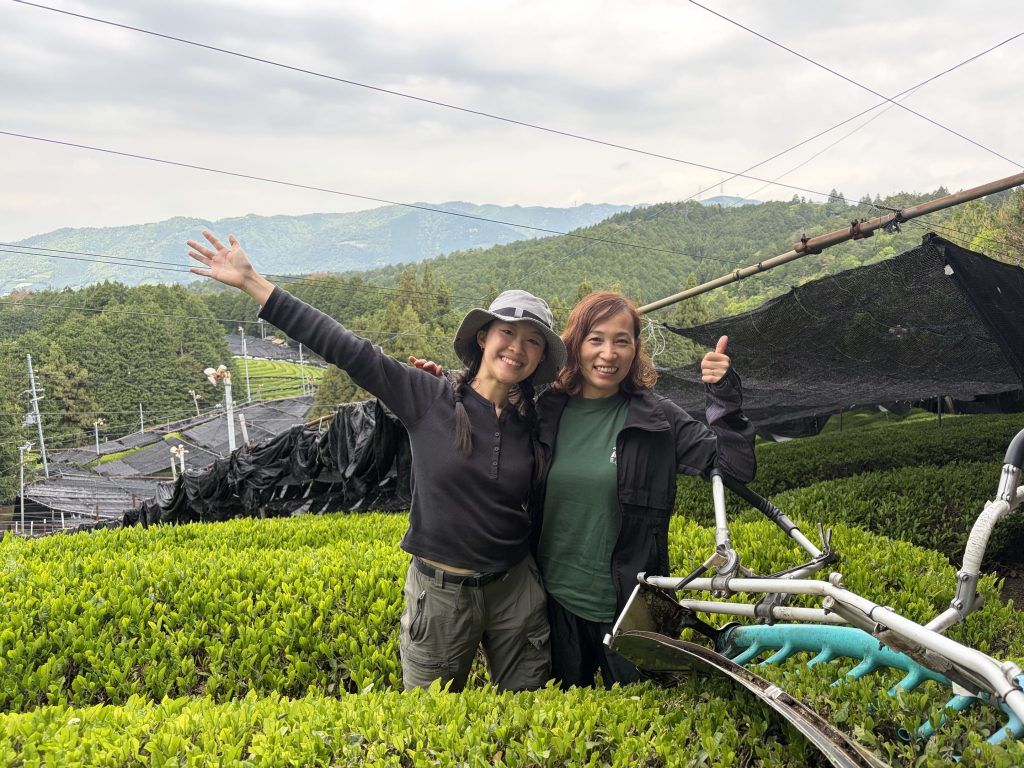
Thank you Kayo-san, it has been an absolute pleasure working with you on this project! And for everyone else, psst, I had the very very special opportunity of going harvesting with Kayo-san for natural sencha at Aoimori field hehe