My name is Chong Jun, intern #233, from Singapore and part of Obubu’s 2026 Summer internship batch. Being exposed to multiple languages such as Malay, English, dialects of Chinese and a little bit of Japanese and Korean throughout my life, I find that I really enjoy looking for similarities between languages as it makes me feel that all of us are interconnected in some way via our language and by extension, our cultures.
Additionally, when words are translated from one language to another, meanings could sometimes be lost. Because of this, I enjoy trying to decipher the meaning of words in their original language to understand it better. It is my goal to tackle at least one tea-related topic to study the meaning of the original words of items within said topic
As there are countless topics we could look at, after taking reference from a book created and published by Obubu (aptly named “Japanese Tea Basics” aka JTB) and from a project blog written by previous intern and current assistant manager, Maren, I decided to start with the Sencha processing machines.
Preservation
After some amount of research and cross-referencing the JTB for information about how sencha processing machines came about, I found out that Takabayashi Kenzo [ 高林謙三 ], in his fifties, became concerned about Japan’s trade situation in the early Meiji period. He realised that Japan was exporting tea to the west but could not keep up with the export demands. He then gave up his secure profession as a medical doctor and started to work on automating the process of making sencha.
In a way, Takabayashi Kenzo placed importance on ensuring the survival of his country’s tea industry, putting that goal above himself as an individual. His actions were therefore instilled with a sense of preservation. Not preservation through stagnation, but preservation through movement. Rather than keeping Japan’s traditions frozen in time, he sought to give them a way survive into the future, carrying its history and culture with them.
This tension between preservation and innovation can later be seen in how the machines he inspired came to be named.
The Machines
In his pursuit to automate the sencha-making process, Takabayashi Kenzo created a handful of machines. They were the Fresh Leaf Steaming Machine [ Namaha Chaba Mushi Kikai 生葉茶葉蒸器械 ], the Tea Roasting Machine [ 焙茶器械 Hōcha Kikai ], the Tea Rubbing Machine [ 製茶摩擦器械 Seicha Masatsu Kikai ] and the Takabayashi Style Rough Rolling machine [ 高林式茶葉粗揉機 Takabayashi-shiki Chaba Sojūki ]. They had different purposes, from steaming tea leaves to rolling and drying, but all of them were created to replicate and replace manual hand techniques.
As time progressed, so did those machines. For the rolling machines in particular, engineers realised that it was better to split the rolling steps into specialised machines instead of a 1-size-fit-all machine, and so the following were created to fulfill those roles:
- Sojū ki – 粗揉機
- So 粗 ‘rough/coarse’ + jū 揉 ‘rub/knead’ + ki 機 ‘machine’
- Jūnen Ki – 揉捻機
- Jū 揉 ‘rub/knead’ + nen 捻 ‘twist’ + ki 機 ‘machine’
- Chūjū Ki – 中揉機
- Chū 中 ‘middle’ + jū 揉 ‘rub/knead’ + ki 機 ‘machine’
- Seijū Ki – 精揉機
- Sei 精 ‘refine’ + jū 揉 ‘rub/knead’ + ki 機 ‘machine’
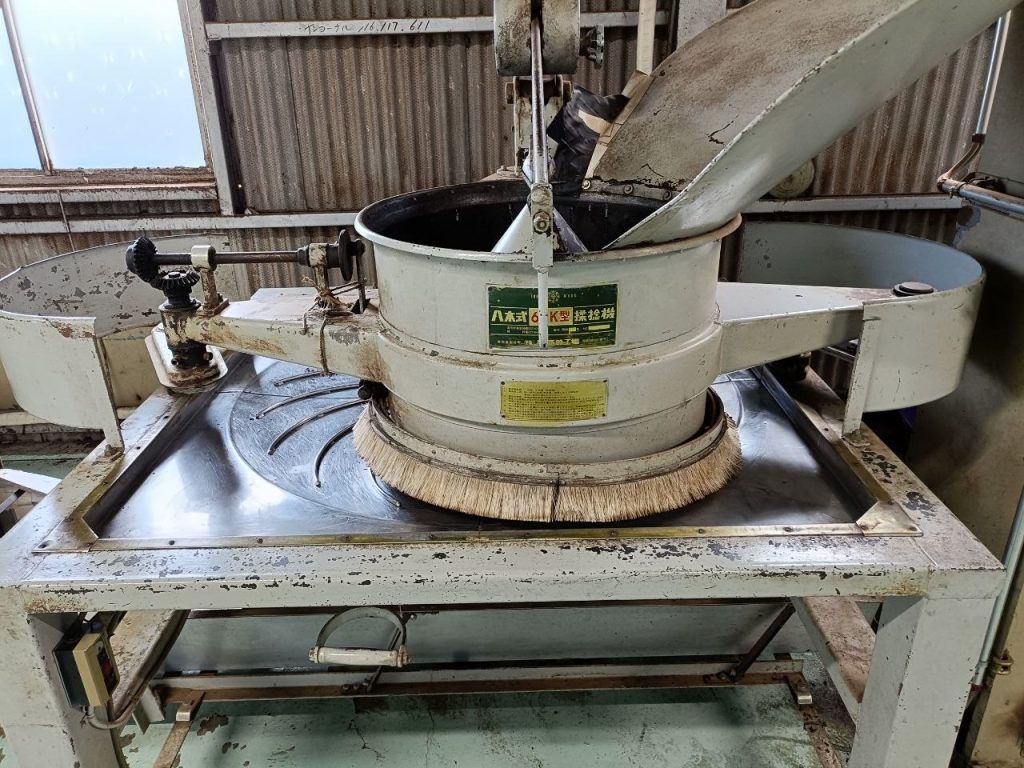
Jūnen Ki, 揉捻機, Twisting and Curling Machine
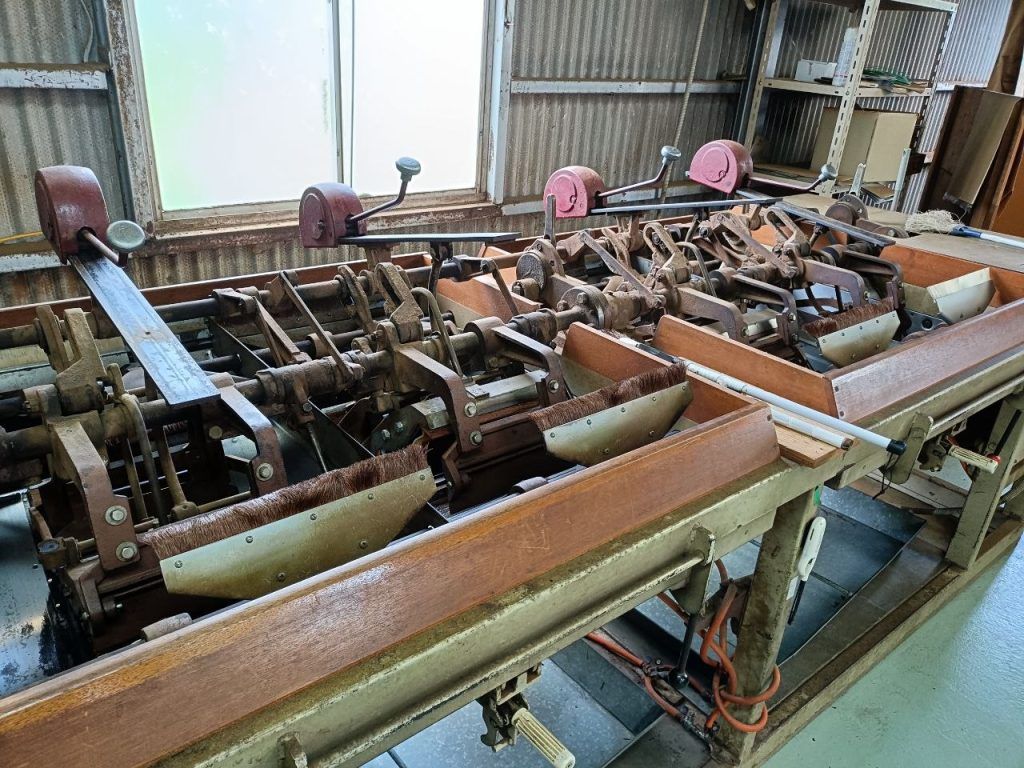
Seijū Ki, 精揉機, Shaping Machine
What Gets Lost in Translation?
Within Obubu, the english names and the direct translations of the aforementioned specialised rolling machines are as follows:
- Sojū ki – 粗揉機
- Direct translation – Rough Rolling Machine
- English name – Rough (and soft) Rolling Machine
- Jūnen Ki – 揉捻機
- Direct translation – Rolling and Twisting Machine
- English name – Twisting and Curling Machine
- Chūjū Ki – 中揉機
- Direct translation – Middle Rolling Machine
- English name – Separating Machine
- Seijū Ki – 精揉機
- Direct translation – Fine Rolling Machine
- English name – Shaping Machine
I noticed that while the English names provide a clearer picture of what the individual machines do, the Japanese names provide a clearer idea of what the machines do in relation to the process as a whole. In each of the machines, the kanji ‘揉’ is in their name. The meaning of this kanji means ‘to rub/knead’ but in the context of tea processing it can mean ‘to roll’. The occurrence of 揉 in each name highlights the connection between the machines. Although they now perform different specialised functions, the Japanese names group them together as different stages of the same process of rolling the tea leaves. Such nuance is lost with the english translation and it is very exciting to me to have uncovered this realisation.
A translation can tell us what a word means, but looking at the original can sometimes tell us why it means it. I found myself wondering which of the names were better for usage but came to the conclusion that neither the Japanese nor English name is necessarily “better”, they simply preserve different pieces of information. By looking at both, we get a fuller picture, and a small reminder that names describe both the object it is naming and the person who named it.