Obubu was founded on the belief that tea shouldn’t just be a product; rather, a relationship between farmer and drinker. That belief shows up in everything, from our internship program to the way we talk about our fields – not as inventory, but as places with histories worth knowing. If each of Obubu’s fields has a story, then the tools we build to share those stories matter just as much as the stories themselves.
Hello! I am Monica, and I was intern #235 during the summer of 2026. A little bit about me is that I’m currently an upcoming senior at the University of Washington. I’m studying informatics, which means I practice developing information technology for the good of people and communities. A large part of my educational journey so far has been focused on using data and research to design functional and helpful experiences for various user groups. This is why I feel passionate about projects that put real people at the center of the design process. My intern project gave me the chance to do exactly that.
First and foremost, I must mention where my project took its roots. This is thanks to Kenji (Intern #218), who compiled a comprehensive database and visualization tool for all 29 fields Obubu’s currently maintaining. So please, read his blog post once you get the chance to. Additionally, I have my ancestors Yanis (Intern #143) and Milan (Intern #205) to thank for their crucial contributions to Obubu’s ever-growing data development. This has evidently allowed new interns like me to take their work and run with it.
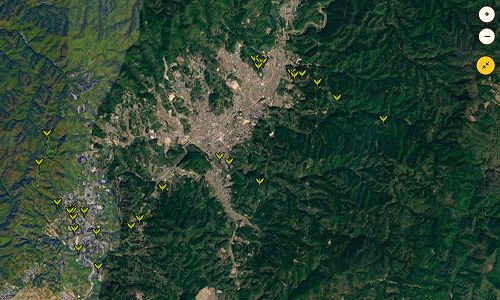
Kenji’s original vision for his project was to create an interactive map of Wazuka where users could click through and learn more about our tea fields – and he delivered a very successful end product. But there was still a key question left unanswered: who exactly would use this map, and what do they need from it? Which is where I identified the main gap I wanted to address: before this map could roll out for official use, it needed to be shaped around the people who will be using it, not just the data behind it.
At Obubu, there are three primary stakeholders:
- Guests – visitors, tourists, tea buyers who may not know Obubu
- Staff – long-term employees who already know the fields, but could use functional/operational information
- Interns & AM’s – rotating, often short-term workers, learning the ropes within a short amount of time
The map has generally remained inaccessible to the people who have needed it the most. Staff, assistant managers, interns, and guests alike had no central, reliable way to use the visualization tool. The issue wasn’t the data itself, but the lack of a home for it. As I dug into who this map should serve, I chose to prioritize guests as my primary stakeholder group. I wanted to build something that felt fun and useful for anyone interested in exploring Obubu digitally, or visiting us for the first time. While finding a way to support those working at Obubu behind the scenes. But designing for guests means asking a harder question first: out of everything Obubu could show, what information would actually be useful? Not just interesting to us, but meaningful to someone seeing our space for the first time.
The first step was ideating how this map could live on our official website, obubutea.com. This would be the main gateway most users would use to actually find the map. That meant designing within Obubu’s existing site framework, learning where my design limitations were, and figuring out how to organize the surrounding information so it introduces the map naturally.
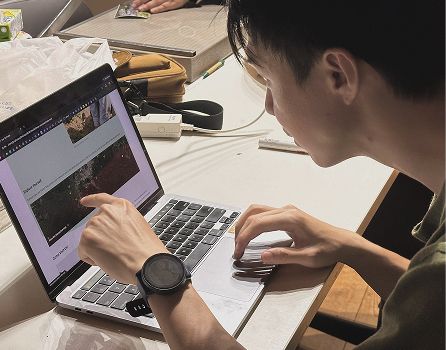
Next, I turned to identifying different use cases for the map itself. As fun as it is to click through individual tea fields, I wanted the map to also tell a broader story about Obubu. So I began incorporating other meaningful spaces like our cafe, factory, and nearby shrines guests might want to visit if they arrive early for a tour.
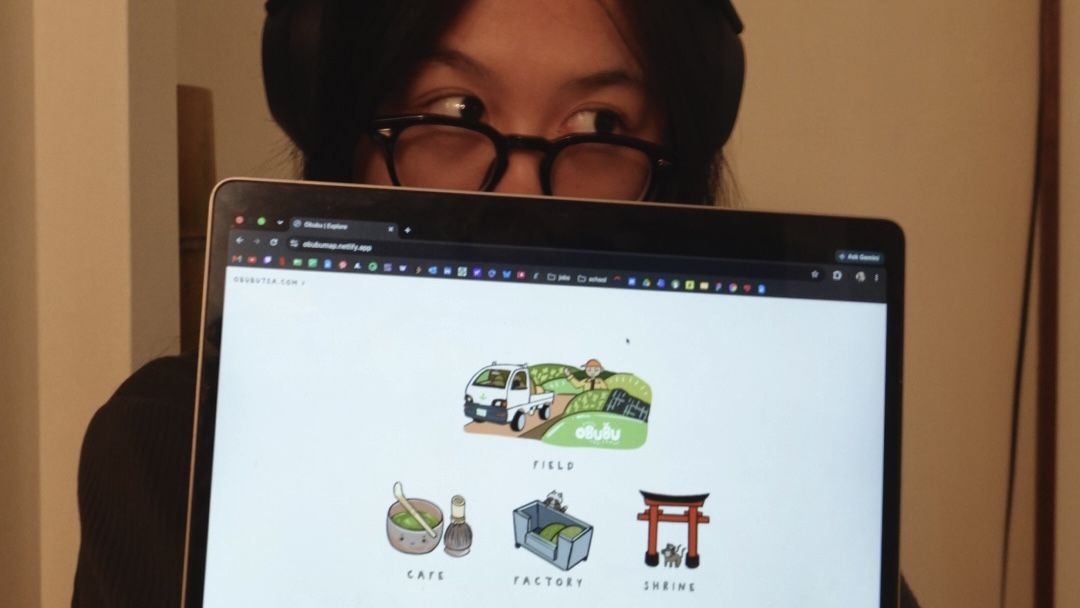
Finally, for this resource to actually go live, the data behind it needed to be just as accessible as the map itself. Staff needed an easy, organized way to update field information without requiring technical experience. My solution included a dashboard staff could use to update the map’s front-facing data directly – no code required – paired with a written guide going over how to use it.
This project is really just a starting point. Looking ahead, I’d love to see a poster placed in Obubu’s café and shop, complete with a QR code that opens the map directly. There’s also room to build a version of the map tailored specifically to staff, AM, and intern needs. One that could even double as an onboarding tool, helping new interns get oriented around Obubu from their very first days. Language accessibility is another natural next step, so the map can serve guests beyond just English and Japanese speakers. And of course, as Obubu’s fields continue to grow, so should the map. This is a resource I hope to watch continue to grow right alongside us.
And with that, I want to thank all of the interns, AMs, and staff who encouraged me to take on this project. I couldn’t have done it without your support and feedback. Special thanks to Kenji, whose original vision gave me something real to build on. And George, who oversaw and allowed my vision to come to life. I hope my work will help the future of Obubu following my time here as an intern! <3